
The first freeze in Northwest Arkansas usually shows up somewhere between the last week of October and the middle of November, and it rarely gives much warning. One evening the forecast calls for a low in the mid 40s, and three days later the temperature drops into the upper 20s overnight. Homes that handled a hot, stormy summer without any obvious problems can develop serious issues the moment water starts freezing inside gutters, pipes, and roof seams. The trouble is that most freeze damage starts small and hidden, then shows up as a stained ceiling or a soaked crawl space weeks later. Checking your roof, gutters, attic, and plumbing now gives you time to fix small problems while the weather still cooperates with repairs. Toro Construction has worked on homes across Bentonville, Rogers, Springdale, Fayetteville, and the surrounding communities since 2002, and the same list of overlooked items comes up every fall. This guide walks through what to check before the first freeze, why each item matters, and when to call a professional instead of handling it yourself.
Roof and Gutter Checks Homeowners Should Complete Before the First Freeze
Your roof takes the first hit when temperatures drop, and it is also the part of the house most homeowners never look at closely. Summer in Arkansas brings hail, high wind, heavy rain, and long stretches of intense sun, all of which age roofing materials faster than people expect. Damage from a June storm can sit unnoticed for months because the roof still sheds water fine in mild weather. Freezing changes that, since water that works into a small gap expands as it turns to ice and widens the opening a little more each night. Gutters play an equally large role, because a clogged gutter holds standing water that freezes into a heavy block along the edge of your roof. The goal in early fall is simple: find the weak spots while shingles are still warm enough to seal properly and while a repair crew can work safely. Need a roof inspection before the first freeze? Click here for our roofing services.
Shingle and Flashing Inspection Before the First Freeze
Start with a slow walk around the perimeter of your house on a clear day, ideally in the morning when the light comes in at an angle and makes surface irregularities easier to spot. Look for shingles that curl at the corners, sit higher than the ones around them, or show dark patches where the protective granules have worn away. Granule loss is one of the clearest signs of an aging asphalt roof, and you can often confirm it by checking the bottom of your downspouts for a gritty buildup that looks like coarse sand. Lifted or missing shingles usually point to wind damage, and Northwest Arkansas gets plenty of straight line wind events between spring and late summer. Hail damage is harder to see from the ground because it often appears as small bruised spots rather than obvious holes, so a set of binoculars helps. Pay attention to any area where the roof plane changes direction, since valleys carry more water than any other part of the system. If you see anything that looks out of place, write it down and note its location rather than climbing up to investigate on your own.
Flashing deserves its own pass because it fails more often than the shingles themselves. Flashing is the metal that seals the joints where your roof meets a chimney, a wall, a skylight, or a plumbing vent, and those joints are exactly where water wants to get in. Rubber pipe boots are a common weak point, since ultraviolet exposure breaks down the rubber collar and cracks typically appear somewhere around the eight to twelve year mark in a climate like ours. Chimney flashing can pull loose as the masonry and the roof deck move at slightly different rates through years of expansion and contraction. Step flashing along a sidewall can rust through or slip out of position if it was installed without proper overlap. Sealant is not a permanent fix for any of these, and a bead of caulk that looks fine in July may be cracked and shrunken by the time the temperature drops. When flashing fails, water does not always drip straight down into a visible spot; it often runs along a rafter and shows up several feet away from the actual leak.
Timing matters more than most homeowners realize, and this is the main reason to handle roof repairs before the first freeze rather than after. Asphalt shingles rely on a heat activated adhesive strip that bonds each course to the one below it, and that strip needs sustained warmth to seal correctly. Once daytime highs stay below roughly 40 degrees, that bond does not form on its own and shingles have to be hand sealed, which adds labor and introduces more room for error. Cold roof decks are also harder and more dangerous to work on, and frost on a slope makes safe access a real problem for any crew. Repairs made in October generally cost less and perform better than the same repairs made in January under emergency conditions. There is also the matter of scheduling, since the first hard freeze reliably fills every roofing company’s calendar within a day or two. Getting an inspection done in early fall puts you at the front of the line instead of the back.
Gutter and Downspout Cleaning Before the First Freeze
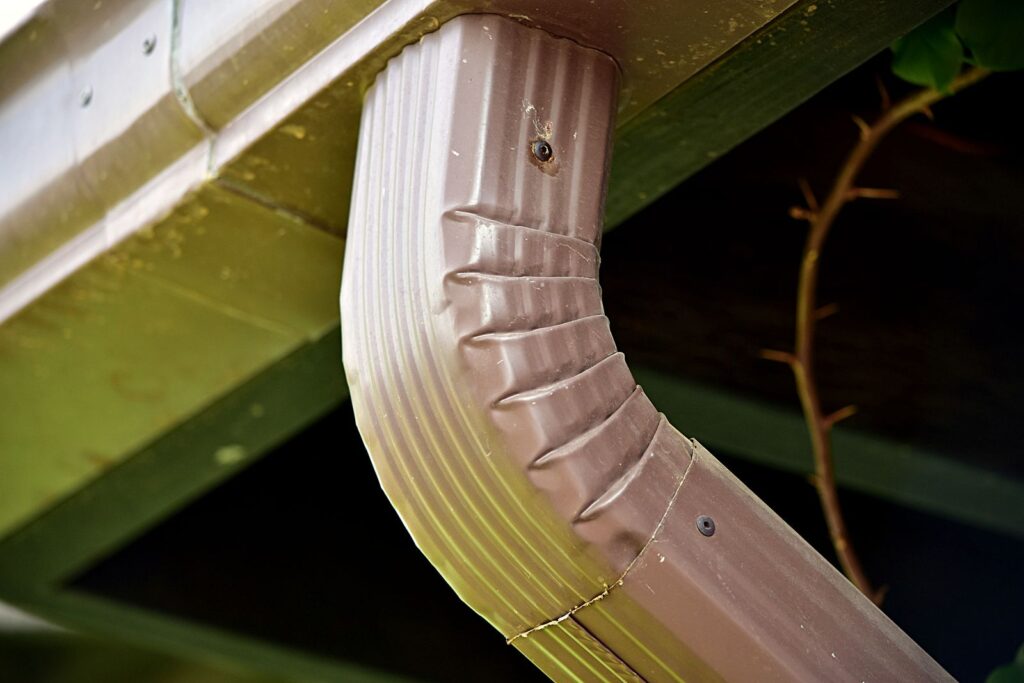
Gutter cleaning gets treated like a chore that can slide, and in Northwest Arkansas that assumption causes real damage. Our tree mix includes a lot of oaks, which hold their leaves later than maples and often drop well into November. That means a gutter cleaned in early October can be full again by the time the first freeze hits, so most homes here need two passes rather than one. Debris does more than block flow; it holds moisture against the metal and creates a soggy mat that freezes into a solid mass. A single 40 foot run of gutter packed with wet leaves and ice can add well over a hundred pounds of load to fasteners that were never designed to carry it. Sagging gutters pull away from the fascia board, and once that connection loosens, water spills directly against the wood behind it. Rotted fascia is one of the more expensive fall repairs we see, and it almost always starts with a gutter nobody cleaned.
Blocked gutters also set the stage for ice dams, which are less common in Arkansas than in the upper Midwest but far from rare. An ice dam forms when warm air escaping from your living space heats the roof deck, melts snow or frost from underneath, and sends that meltwater down the slope. When the water reaches the eave, which sits over unheated space and stays much colder, it refreezes into a ridge. Each cycle adds more ice, and eventually the ridge backs standing water up under the shingle courses. Shingles shed water; they do not seal against water sitting still and pushing upward. That backed up water finds nail holes and seams, then works into the decking and down into the attic insulation. Homes with clogged gutters ice up faster because the debris gives the freeze something to grab onto right at the coldest point on the roof.
Downspouts and drainage need attention at the same time, since a clean gutter feeding a blocked downspout accomplishes nothing. Run a hose into each gutter and watch the outlet to confirm water moves through freely and quickly. Check that every downspout discharges at least four to six feet away from your foundation, using extensions or splash blocks where needed. Water dumped next to the foundation saturates the soil, and saturated soil that freezes expands and puts pressure against foundation walls. In homes with crawl spaces, which are common throughout Benton and Washington counties, that same water ends up as standing moisture underneath your floor system. Damp crawl spaces lead to condensation, wood rot, and mold problems that show up as musty odors and cold floors long before anyone identifies the cause. A few dollars in downspout extensions solves a problem that costs thousands to remediate later.
Attic Insulation and Ventilation Checks Before the First Freeze
The attic is where roof performance and energy performance meet, and it is worth a look with a flashlight before winter sets in. Check that insulation covers the attic floor evenly, with no bare patches around the edges or gaps where someone moved it aside to run a wire. Blown in insulation settles over time and compresses under foot traffic, and compressed insulation loses a significant share of its rated value. Most attics in this part of Arkansas perform best with an R value somewhere in the range of 38 to 60, and a lot of older homes fall well short of that. Measure the depth in several spots rather than trusting a single reading near the access hatch. While you are up there, look for daylight coming through anywhere it should not, since a visible pinhole of light means a direct path for water. Also scan the underside of the roof deck for dark staining, which usually indicates either an active leak or a long running moisture problem.
Ventilation is the other half of the equation and it gets misunderstood constantly. A properly vented attic pulls cool outside air in at the soffits and pushes warm moist air out near the ridge, which keeps the roof deck close to outdoor temperature. Building code generally calls for one square foot of net free vent area for every 150 square feet of attic floor, and that ratio can be reduced to one in 300 when a vapor retarder is present and the venting is balanced between intake and exhaust. Balance is the part people miss, since adding a ridge vent without adequate soffit intake can actually pull conditioned air out of the house instead of moving air through the attic. Insulation blown too far toward the eaves regularly buries the soffit vents and shuts down intake entirely. Baffles installed at each rafter bay keep that channel open and cost very little to add. An attic that runs warm in winter is the single biggest contributor to ice dam formation on an otherwise healthy roof.
Air sealing rounds out the attic check and often delivers the fastest payback of anything on this list. Warm indoor air carries moisture, and when it leaks into a cold attic it condenses on the first cold surface it touches. Look for frost or water droplets on the heads of roofing nails poking through the deck, which is a clear sign of moisture moving up from the living space. Common leak points include the attic hatch, recessed light housings, plumbing chases, and the gaps around ductwork and flue pipes. Bathroom exhaust fans that terminate inside the attic instead of through the roof or a sidewall dump gallons of humid air into that space every week. Over a full winter, that moisture soaks insulation, reduces its performance, and can start mold growth on the sheathing. Sealing those openings with the right materials keeps heat where you paid to put it and keeps your roof deck dry.
Plumbing and Water Damage Risks to Check Before the First Freeze
Frozen and burst pipes cause more sudden interior damage than almost any other winter event, and the physics behind them surprise a lot of homeowners. A pipe rarely splits because ice presses directly outward against the wall of the pipe. What actually happens is that an ice blockage forms at the coldest point, then continued freezing builds enormous pressure in the trapped water between that blockage and a closed faucet downstream. That pressure has to go somewhere, and it ruptures the pipe at its weakest point, often several feet away from the ice itself. A half inch supply line can put out several hundred gallons an hour once it opens, and a break that starts at two in the morning can flood multiple rooms before anyone notices. Pipes in unheated spaces generally become vulnerable when outdoor temperatures hold near 20 degrees or lower for an extended stretch, which happens most winters here. Preparing the plumbing takes an afternoon and prevents the kind of loss that takes months to repair.
Exterior Faucets and Irrigation Lines to Check Before the First Freeze
Start outside, because exterior fixtures freeze first and get forgotten most often. Disconnect every garden hose from every spigot, drain the hoses, and store them somewhere out of the weather. This step matters even on homes with frost proof sillcocks, which are the longer style hose bibs designed to shut off water back inside the heated wall cavity. A frost proof faucet only works as intended when nothing blocks it from draining, and an attached hose traps water in the barrel where it freezes and cracks the fixture. The damage frequently stays hidden until spring, when someone turns the faucet on and water pours into the wall instead of out the spout. Install an insulated faucet cover on each exterior spigot after disconnecting, since they cost only a few dollars each. If your home has interior shutoff valves for the outdoor lines, close them and open the exterior faucet to let the remaining water drain out.
Irrigation systems need more than a shutoff, and this is where a lot of homeowners cut corners. Sprinkler lines sit shallow, and the water left in the laterals and heads freezes and splits both the poly tubing and the head bodies. Most systems in our area should be blown out with compressed air by someone who knows the correct pressure limits for the pipe material, since too much pressure damages the components you were trying to protect. Backflow preventers sit above ground and are among the most expensive parts of the system to replace, so wrap them with insulation and a protective cover after the blowout. Set the controller to the off or rain position so the system does not attempt a cycle during a cold snap. Do the same for any decorative water feature, pond pump, or outdoor kitchen supply line. Pool equipment follows similar logic and should be handled before the first hard freeze rather than during it.
Do not overlook the smaller exterior items that hold water. Rain barrels should be drained and tipped or disconnected from the downspout so ice does not split the barrel or crack the fitting. Outdoor refrigerators, ice makers, and utility sinks in a detached garage or shop all have supply lines that can freeze. Check any exposed pipe running along the exterior of the house or through an unconditioned breezeway, and insulate it with foam sleeve rated for outdoor use. Well houses and pump enclosures need a working heat source and enough insulation to hold temperature through a long night. Crawl space vents should be closed or covered for the season, since open vents let freezing air blow directly across the pipes running under your floor. Take a few photos of what you shut off and where, because remembering the sequence in April is harder than it sounds.
Interior Pipes and Unheated Spaces to Check Before the First Freeze
Inside the house, the pipes at risk are the ones running through spaces you do not heat. That includes crawl spaces, attached garages, attics, and any run of supply line inside an exterior wall. Kitchen and bathroom sinks on outside walls are classic trouble spots, because the pipe sits in a cabinet that blocks warm room air from reaching it. During a cold snap, open those cabinet doors so heated air can circulate around the plumbing. Foam pipe insulation sleeves are inexpensive and effective on any accessible run, and they install in minutes with a utility knife and a few zip ties. Pay particular attention to the sections nearest an exterior wall penetration, since cold air pulls straight in through gaps around the pipe. Seal those penetrations with expanding foam or caulk while you are working in the area.
Letting a faucet drip during extreme cold is old advice that still works, though the reason is often misstated. The moving water helps, but the larger benefit is that an open faucet relieves the pressure buildup that actually splits pipes. Choose the fixture farthest from where your water service enters the house, and run a slow, steady drip from both the hot and cold sides. Keep the thermostat at a consistent temperature day and night rather than setting it back at bedtime, since the few dollars saved are not worth the risk during a hard freeze. Homes that sit empty for part of the winter need extra care, and setting the thermostat no lower than 55 degrees is the standard recommendation. For extended absences, shutting off the main water supply and draining the system is the safer route. Ask a neighbor to check the house every few days if you travel over the holidays.
Heat cable is a reasonable tool for problem areas that freeze year after year, but it has to be used correctly. Buy only cable listed by a recognized testing laboratory and rated for the specific application, since interior and exterior products are not interchangeable. Follow the manufacturer instructions exactly regarding overlap, since wrapping cable over itself creates a fire hazard. Never run heat cable underneath pipe insulation unless the product is specifically approved for that arrangement. Inspect existing cable each fall for cracked jacketing, damaged plugs, or frayed sections, and replace anything questionable rather than gambling on it. Plug the cable into a circuit protected by a ground fault interrupter for safety. If the same pipe keeps freezing every winter, the real fix is usually rerouting or insulating it properly rather than adding more cable.
Water Shutoff Knowledge and Emergency Planning Before the First Freeze
Everyone in the household who is old enough should know where the main water shutoff is and how to operate it. In most homes here the main valve sits near where the service line enters, often in a crawl space, a utility closet, a garage wall, or a basement. There is also a curb stop at the meter box near the street, though that one typically requires a meter key. Find your valve now, turn it to confirm it actually moves, and hang a tag on it so nobody has to search in a panic. Older gate valves seize up from years of sitting untouched, and discovering that during an active leak is the worst possible timing. Keep a meter key and a flashlight somewhere obvious and consistent. Two minutes of preparation can be the difference between a wet floor and a flooded first level.
Beyond the main valve, take stock of the individual shutoffs and supply lines throughout the house. Toilets, sinks, dishwashers, ice makers, and washing machines all have their own stop valves, and every one of them should turn freely. Braided stainless steel supply hoses last far longer than the rubber ones and are worth swapping in on any appliance still using the original. Water heaters deserve a look as well, since a tank that has been in service more than ten years is running on borrowed time. Inexpensive battery powered water alarms placed near the water heater, under sinks, and in the laundry area will alert you to a leak long before it spreads. Some models connect to your phone, which helps considerably when a break happens while you are away. Knowing where your homeowners insurance policy stands on water damage is worth a phone call to your agent before you need it.
If a pipe does break, the first hour determines how much of the damage becomes permanent. Shut off the water immediately, cut power to any affected area at the breaker panel if it can be reached safely, and start documenting everything with photos and video before you move anything. Standing water begins soaking into drywall, subflooring, and framing within minutes, and porous materials wick moisture upward well past the visible water line. Clean water from a broken supply line starts as Category 1 under IICRC standards, but it degrades into Category 2 within roughly 24 to 48 hours as it picks up contaminants from building materials. Mold can begin colonizing damp surfaces in that same 24 to 48 hour window, which is why fast professional drying matters far more than most people assume. Household fans and a shop vacuum cannot pull moisture out of wall cavities, insulation, or subfloor layers. Dealing with a burst pipe or standing water in your home? Click here for our water restoration services.
Why You Need a Professional Inspection Before the First Freeze
Homeowner checks catch a lot, and everything above is worth doing. The limitation is that the most consequential problems tend to live where you cannot safely or easily look, including the roof surface itself, the underside of the deck, and the connection points between systems. A trained inspector knows the failure patterns for our specific climate and can tell the difference between cosmetic wear and a condition that will let water in the first time it freezes. That distinction saves money in both directions, since it prevents unnecessary work and prevents the far more expensive damage that comes from waiting. A professional inspection also creates documentation, which matters enormously if you later file a storm damage claim. Getting on the schedule in early fall is straightforward; getting on it the week after the first hard freeze is not.
What a Professional Roof Inspection Covers Before the First Freeze
A thorough roof inspection covers considerably more ground than a visual pass from the driveway. The inspector examines the field of the roof for granule loss, thermal cracking, blistering, and impact bruising from hail, then evaluates how much service life the covering has left. Every penetration gets checked individually, including plumbing vents, exhaust caps, skylights, chimneys, and satellite mounts. Valleys and sidewall transitions receive close attention because they carry concentrated water flow and fail first. The inspector also assesses the condition of the decking underfoot, since soft spots point to moisture that has already worked its way in.
The inspection continues into the attic, which is where hidden problems reveal themselves most clearly. Staining on rafters, damp or matted insulation, rusted nail heads, and daylight visible at the eaves all tell a story about how the roof and the attic are performing together. The inspector checks intake and exhaust ventilation for balance and confirms that soffit vents are open rather than buried under blown insulation. Bath fan terminations, flue clearances, and air sealing at the attic floor get reviewed as part of the same visit. These attic findings frequently explain roof symptoms that would otherwise look like a simple shingle problem.
You should receive a written report with photographs, a clear description of any issues found, and a straightforward recommendation with pricing. Toro Construction provides free roof inspections with honest assessments, which means we will tell you when a roof has years of life left instead of pushing a replacement you do not need. If repairs are warranted, we explain the options and the reasoning behind each one so you can make the call with real information. Serving homeowners throughout Benton and Washington counties, we handle both residential and commercial roofing with the same process. Want a local roofing team that knows Northwest Arkansas weather? Click here for our Bentonville roofing services.
How Fast Restoration Response Limits Damage After the First Freeze
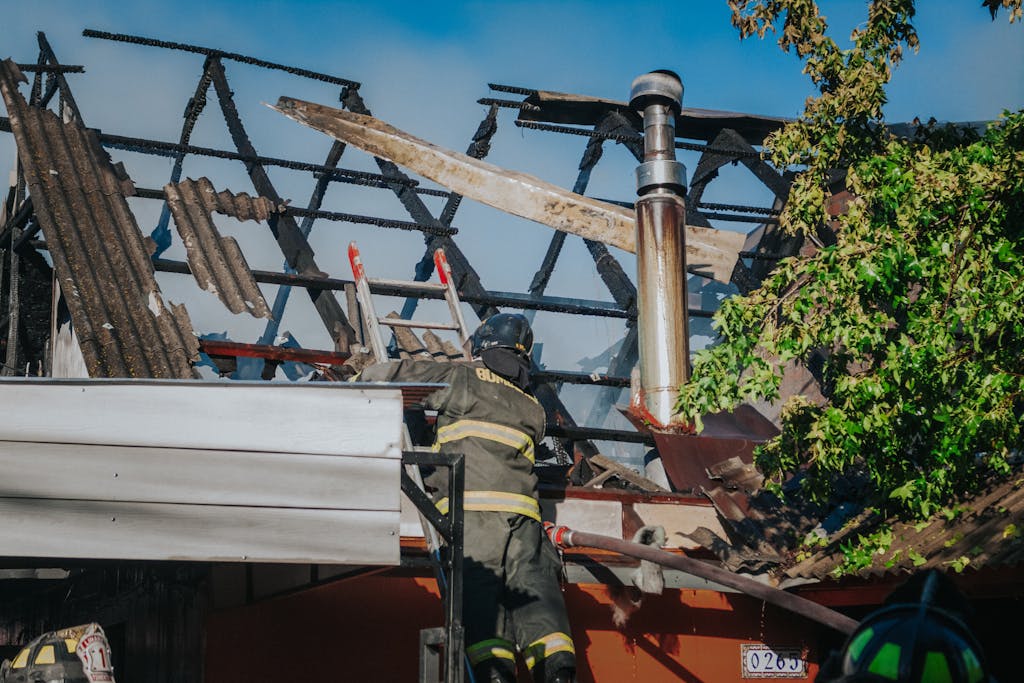
When a freeze causes water intrusion, response time drives the entire outcome of the job. Water spreads laterally through building materials far faster than most homeowners expect, moving through subfloor seams, wicking up drywall, and saturating insulation inside wall cavities. Every hour that passes expands the affected area and increases what has to be removed rather than dried in place. Professional restoration begins with moisture mapping using meters and thermal imaging to find the full extent of the intrusion, including the parts that look dry on the surface.
Proper drying requires commercial equipment and a plan built around the specific materials involved. Air movers, low grain refrigerant dehumidifiers, and sometimes negative air containment work together to pull moisture out of the structure on a controlled schedule. Technicians take daily readings and adjust the setup until materials reach documented dry standards, which is the only reliable way to confirm the job is finished. Toro Construction holds IICRC certification for water restoration, meaning our crews follow established industry standards rather than improvising.
Working with one company through the entire process removes a significant headache from an already stressful situation. We handle the emergency response, the drying, the demolition where it is necessary, and the reconstruction that puts your home back together. That continuity means no gap between the restoration contractor finishing and a separate remodeler starting, and no finger pointing about scope. We offer 24/7 emergency service for storm damage and urgent repairs, because pipes do not break during business hours. Call us at (479) 877-7121 the moment you find water, and we will get someone moving.
Why Choose Toro Construction Before the First Freeze
Toro Construction has served Arkansas homeowners since 2002, and more than 20 years in this market means we have seen how local weather actually behaves. We are licensed and insured in Arkansas, and we back qualifying projects with a 20 year craftsmanship warranty. Our crews use high quality materials and proven installation methods rather than cutting corners that show up three winters later. We keep communication clear from the first phone call through the final walkthrough, so you always know what is happening and when.
Having roofing, water restoration, fire restoration, and home remodeling under one roof simplifies things when a project grows beyond its original scope. A leak discovered during a roof inspection can be traced, repaired, dried, and rebuilt by the same team on one timeline. We keep our schedules realistic and our project management organized, which means the dates we give you are dates we intend to hit. Financing options are available for larger projects, and we are glad to walk through what that looks like for your situation.
We are based at 3604 NW Frontage Rd Suite 6 in Bentonville, and we work throughout Northwest Arkansas and the River Valley, including Rogers, Bentonville, Springdale, Fayetteville, Centerton, Bella Vista, Lowell, Siloam Springs, Fort Smith, Van Buren, and the surrounding communities. This is our home, and we stay involved in it through consistent community support. Schedule your free roof inspection before the first freeze by calling (479) 877-7121 or emailing info@toroconstructionco.com. A short visit now is the cheapest insurance you will buy all winter.