
Ice dams start with heat, not with cold. Warm air leaking out of your living space climbs into the attic, heats the underside of the roof deck, and melts the snow sitting on the upper slopes. That meltwater runs down toward the eaves, where the roof hangs past the heated part of the house and stays near outdoor temperature, and there it refreezes into a solid ridge of ice. Every additional thaw cycle adds more ice, the ridge grows taller, and eventually water backs up behind it and sits on the roof instead of draining off. Asphalt shingles are designed to shed water that keeps moving, so standing water finds the seams, wicks upward under the courses, and reaches the wood deck below. Northwest Arkansas homeowners see this pattern more often than they expect, because our winters swing above and below freezing several times in a single week. Early fall is the right time to deal with it, since air sealing, insulation work, ventilation upgrades, and roof repairs are far easier to schedule in September and October than during a January ice storm. Understanding how ice dams form gives you a clear path to stopping the damage before the first hard freeze arrives.
How Ice Dams Form on Arkansas Roofs During Freeze and Thaw Weather
An ice dam needs three ingredients working together: snow or ice on the roof, a roof surface above freezing in the upper areas, and a roof surface below freezing at the eaves. Arkansas delivers all three regularly, especially during the ice storms and mixed precipitation events that roll through Benton and Washington counties. Homeowners often blame the weather alone, but the real driver sits inside the attic, where heat loss and poor airflow create the temperature split that builds the dam. A roof that stays uniformly cold across its entire surface rarely forms dams, even under heavy snow load. That is why two houses on the same street, hit by the same storm, can end up with completely different results. The sections below break down each cause so you can identify what is happening on your own home. Need a professional set of eyes on your attic and roof before winter? Click here for our roofing services in Bentonville and across Northwest Arkansas.
How Attic Heat Loss Lets Ice Dams Form on Your Roof
Heated air rises, and it escapes through every gap between your living space and the attic floor. Recessed can lights, bathroom exhaust fans, plumbing vent stacks, attic hatches, chimney chases, and the top plates of interior walls all leak warm air upward. Each of these openings looks small on its own, and together they can add up to the equivalent of a window left open all winter. That escaping air carries heat straight to the underside of the roof deck, raising the sheathing temperature well above the outdoor air. Snow sitting on the warmed section begins melting from the bottom up, even when the thermometer outside reads in the twenties. The water travels down the slope by gravity and hits the cold overhang, where the freeze begins. Air sealing the attic floor is the single most effective correction, and it usually costs less than people assume.
Insulation depth matters just as much as air sealing, though the two solve different problems. Many homes in our region were built with attic insulation that met the code of its day and has since settled, shifted, or been trampled by anyone who crawled up there for storage or wiring. Blown fiberglass and cellulose compress over decades, and compressed insulation loses a meaningful share of its rated performance. Current guidance for our climate zone puts attic insulation somewhere in the range of an R value of 38 to 49, and a surprising number of attics measure closer to 19 or 25. Thin coverage lets conduction pull heat through the ceiling drywall around the clock. You can often see the result from the street after a snowfall, because melted stripes appear over the warm spots while the rest of the roof stays white. Uneven melt patterns are a reliable early warning that heat loss is feeding a future dam.
Ductwork and mechanical equipment in the attic add another layer to the problem. Supply ducts that have separated at a joint or lost their insulation wrap dump conditioned air directly into the attic space. A single disconnected boot behind a return can raise attic temperature by several degrees, which is more than enough to trigger melting under a snow load. Bathroom and kitchen exhaust fans that terminate in the attic instead of through the roof or wall make things worse, since they push warm and humid air right at the sheathing. That moisture condenses on cold nails and framing, then drips onto insulation and reduces its performance further. Fixing these issues improves your heating bills and comfort in the same visit, so the work pays for itself in more than one way. Toro Construction handles attic and roof assessments together, because the two systems fail together far more often than they fail separately.
How Poor Attic Ventilation Helps Ice Dams Form on Your Roof
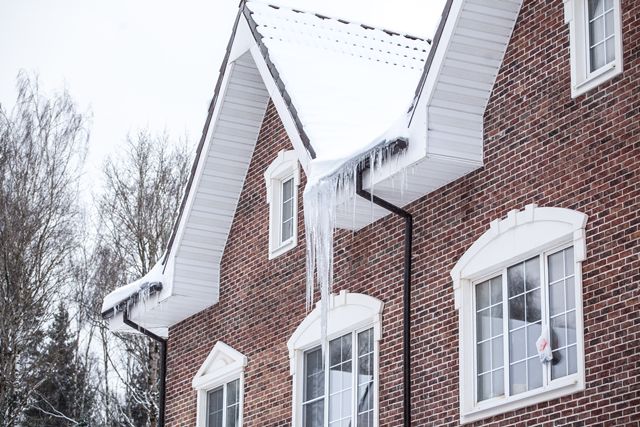
Ventilation is the counterweight to heat loss, and it works by flushing warm air out of the attic before it can warm the roof deck. A balanced system pulls cool outside air in low at the soffits and pushes warm air out high at the ridge, creating steady movement across the underside of the sheathing. When that airflow runs the way it should, the roof deck stays close to outdoor temperature and snow melts slowly and evenly. The general design target used across the roofing trade is one square foot of net free vent area for every 150 square feet of attic floor, and that ratio can move to one per 300 when the intake and exhaust are balanced and a vapor retarder is present. Balance is the part people miss. Adding ridge vent without adequate soffit intake starves the system and can even pull conditioned air up through ceiling gaps. Roofers see this constantly on homes where a previous crew installed exhaust and never touched the intake side.
Blocked soffits are the most common ventilation failure we find in Arkansas attics. Insulation installers frequently push material out toward the eaves and pack it against the roof sheathing, sealing the intake vents completely. Baffles, sometimes called rafter vents, exist to hold a clear air channel at that spot, and plenty of homes never got them. Paint from an exterior repaint can also seal perforated vinyl soffit panels, and birds, wasps, and rodents block them with nests. Once intake is gone, the ridge vent can only draw from wherever it can find air, which usually means the house itself. The attic then runs warmer than it should and holds humidity that would otherwise be carried away. Clearing and protecting the soffit intake often produces an immediate change in attic temperature.
Mixing incompatible vent types creates a quieter version of the same failure. A roof with a ridge vent plus powered attic fans plus gable vents will short circuit, since the fan simply pulls air from the nearest opening rather than drawing it across the full attic. Air takes the easiest path available, so large sections of the deck never get flushed at all. Those dead zones stay warm, melt snow above them, and feed water to the eaves while the rest of the roof behaves normally. Proper design means choosing one exhaust strategy and sizing the intake to match it. Complex roofs with multiple ridges and hips need the ventilation planned section by section rather than treated as one open space. A roofing contractor who measures net free area instead of eyeballing it will catch these mismatches, and correcting them is usually a modest project compared with repairing water damage.
How Roof Design and Winter Weather Cycles Let Ice Dams Form
Some roofs are simply more prone to ice dams because of their shape. Valleys collect snow and meltwater from two slopes at once, which concentrates volume in a narrow channel and slows drainage. Dormers create pockets where snow drifts and lingers, and the intersections around them carry a high risk of backed up water. Low slope sections give water less push toward the edge, so it moves slowly and has more time to freeze. Deep overhangs extend well beyond the heated envelope and stay cold no matter how good your attic is, which makes them natural freezing points. North facing slopes get little winter sun and hold snow and ice for days after the south side has cleared. None of these features are defects, but they raise the stakes on insulation, ventilation, and underlayment quality.
The freeze and thaw rhythm of an Arkansas winter deserves special attention. Northern regions can stay frozen for weeks at a stretch, which oddly limits melting at the roof surface. Our pattern is different, with daytime highs climbing above freezing and overnight lows dropping well below it, sometimes across the same 24 hour period. Every one of those cycles melts a little, refreezes a little, and expands the ice mass at the eaves. Ice expands as it freezes, so water that seeps into a shingle seam or a nail hole widens that opening with each cycle. Freezing rain and sleet, which we get more often than deep powder, form a dense glaze that clings to the roof and blocks drainage even faster than snow. Repeat storms in the same week compound everything, because the previous ice never fully cleared.
Gutters play a supporting role that gets misunderstood. Gutters do not cause ice dams, but a gutter packed with leaves, pine needles, and shingle granules holds water at the coldest edge of the roof and gives the ice a foundation to build on. Once that trough of ice sets up, it bridges to the roof edge and the dam grows upward from there. The added weight is significant, since ice weighs roughly 57 pounds per cubic foot, and a full run of frozen gutter can pull hangers, fascia, and even sections of the gutter away from the house. Downspouts that freeze solid remove the last escape route for meltwater. Cleaning gutters in late fall, after the leaves finish dropping, is basic and effective prevention. It also gives you a chance to spot loose fasteners and sagging runs before ice tests them.
How Ice Dams Damage Your Roof and the Rest of Your Home
The dam itself is not the damage; the water trapped behind it is. Once a pool forms above the ice, it sits against shingles that were never engineered to hold standing water, and it works into every seam and fastener penetration it can find. From there the water enters the roof assembly and moves wherever gravity and building cavities take it, which is often far from the entry point. Homeowners commonly discover the problem as a stain on a bedroom ceiling in February and assume they have a simple leak. In reality the water has already been in the insulation and framing for days. The damage divides into three categories: the roof system itself, the exterior components at the edge, and the interior of the house. Each one carries its own repair costs and its own urgency.
How Ice Dams Damage Your Roof Shingles, Decking, and Underlayment
Asphalt shingles work as a water shedding system, not a waterproof membrane. They rely on gravity and overlap, with each course covering the fasteners of the course below. Standing water defeats that logic completely, because it has time to travel sideways and upward through capillary action between the layers. Water that reaches the nail line follows the shank of each fastener straight through the deck. Repeated saturation and freezing then lift the shingle edges, break the factory seal strips, and loosen the tabs. By spring those loosened shingles catch wind that they would have shrugged off before, which sets up a second round of problems during storm season. Granule loss accelerates in the same areas, and bare asphalt ages quickly once exposed.
The roof deck absorbs the worst of it. Oriented strand board and plywood swell when saturated, lose stiffness, and can delaminate along the layers. Soft spots develop at the eaves first, and a deck that has gone soft will no longer hold nails properly, which means the next roof installed over it will not perform as designed. Prolonged moisture invites rot in the rafter tails and the fascia board they attach to. Once the wood softens, fasteners pull free and sections of the edge sag visibly. Deck replacement adds meaningful cost to any reroof, and it is entirely avoidable with proper prevention. This is one of the main reasons a fall inspection returns value, since deck problems are far cheaper to catch early.
Underlayment quality determines how much of this actually reaches the wood. Self adhering ice and water membrane seals around fasteners and creates a watertight layer at the vulnerable edges, and building code calls for it in areas with a history of ice forming along eaves. The standard application runs from the roof edge to a point at least 24 inches inside the exterior wall line, and steeper or more complex roofs often need wider coverage. Valleys, low slope transitions, and the areas around dormers and chimneys deserve the same treatment. Older roofs in our area were often installed with nothing more than felt paper at the eaves, which offers almost no protection against standing water. Upgrading that detail during a reroof costs very little relative to the total project and dramatically reduces ice dam risk for decades. If your roof is aging and you want to know what protection is actually under your shingles, click here to learn more about our roofing services and free roof inspections.
How Ice Dams Damage Your Gutters, Fascia, Soffits, and Siding
Gutters take a beating from ice dams because they hold the heaviest load at the weakest connection point. A ten foot run of gutter filled with solid ice can carry hundreds of pounds, and hangers spaced for water and leaves were never sized for that. The result is bent gutter sections, hangers torn from the fascia, and separated seams that leak the following spring. Ice that expands inside a downspout can split the seam along its full length. Aluminum bends permanently under that kind of load, so what looks like a cosmetic sag is often a full replacement. Damaged gutters then fail to control roof runoff, and uncontrolled runoff creates foundation and landscaping problems in the wet Arkansas spring. One winter of ice can undo years of good drainage.
Fascia and soffit damage frequently follows. Water backing up behind a dam runs down the back of the gutter and saturates the fascia board it is fastened to, which leads to peeling paint, swelling, and eventual rot. Soffit panels below take on water from above and stay wet, since airflow at that point is minimal in winter. Wet soffits stain, sag, and separate from the frieze board, and they open pathways for squirrels, birds, and insects. Vinyl soffit hides all of this well, so many homeowners find the rot only when a contractor removes a panel years later. The vented soffit that your attic depends on for intake air is exactly the component being destroyed, which makes the ice dam problem worse in future winters. Repairing the edge assembly properly means addressing the roof, the gutter, and the trim as one connected system.
Siding and exterior walls suffer when water gets behind the wall plane. Meltwater that penetrates at the eave can travel into the wall cavity below, wetting sheathing, framing, and any insulation in that bay. Wet cavity insulation stops insulating, which raises heat loss through that wall and can create cold spots and condensation indoors. Behind wood siding, trapped moisture causes cupping, paint failure, and rot at the butt joints. Brick and masonry take damage from a different angle, since water absorbed into the material expands when it freezes and causes spalling at the face. Interior signs show up as bubbling paint near the ceiling line or a musty smell in a closet on an exterior wall. Because the entry point is at the roof and the symptom is at the wall, this damage often gets misdiagnosed and repaired in the wrong place.
How Ice Dams Damage Your Insulation, Ceilings, and Indoor Air Quality
Attic insulation is usually the first casualty inside the house, and it is often the last thing anyone checks. Water dripping from the deck saturates blown fiberglass or cellulose directly below, and wet insulation compresses under its own weight. Fiberglass loses most of its effective R value when saturated, and cellulose can mat down permanently and never recover its loft. That loss creates a cold spot in the ceiling below, and it also feeds the original problem by allowing more heat to escape at exactly that location. Homeowners rarely notice, because the insulation looks similar from the attic hatch and the damage sits at the far edges near the eaves. Higher heating bills in January are often the only clue. Replacing a section of ruined insulation is straightforward work, but only after the source of the water is corrected and the space has fully dried.
Ceilings and interior finishes show the damage everyone recognizes. Brown rings appear on drywall, paint blisters, and textured ceilings can crack or sag under the weight of absorbed water. Crown molding separates at the joints, and hardwood floors below a leak can cup if the water reaches them. Light fixtures and ceiling fans in the path of a leak become an electrical hazard, and any fixture that has taken on water needs evaluation before it is energized again. Water also spreads laterally along the top of the drywall before it drips, so the visible stain is frequently a few feet from the actual entry point. Cutting into the ceiling in the wrong place wastes money and misses the source. Proper diagnosis traces the water path from the roof edge inward.
Mold is the consequence that turns a roofing problem into a health and restoration problem. Mold growth can begin within 24 to 48 hours on wet organic material such as paper faced drywall, wood framing, and insulation backing. Attics and wall cavities are dark, still, and slow to dry in winter, which makes them ideal for growth. Occupants may notice a musty odor, and people with asthma or allergies often react before anyone finds a stain. Drying these spaces properly requires moisture meters, air movers, dehumidification, and sometimes controlled removal of affected material, which is why the work follows established industry standards rather than a shop vacuum and a box fan. Toro Construction is IICRC certified for water restoration, so we can dry, repair, and rebuild without handing you off to another company. Dealing with a ceiling leak or saturated insulation right now? Click here for our water restoration services and 24/7 emergency response.
Why You Need a Roofing Contractor to Stop Ice Dam Damage Before Winter
Ice dam prevention is a fall project, not a winter emergency response. Air sealing, insulation, ventilation corrections, gutter cleaning, and roof repairs all require safe access and workable temperatures, and those conditions disappear once the ice arrives. Removing a dam that has already formed is expensive, risky, and only treats the symptom for that single storm. Chipping at ice with a hammer or an axe destroys shingles and gutters, and salt products used carelessly corrode metal, damage masonry, and kill landscaping. A contractor who understands both the roof and the attic can find the actual cause and fix it once. Scheduling that work in September or October puts you ahead of the first freeze with time to spare.
Why a Fall Roof Inspection Stops Ice Dam Damage Before It Starts
A thorough fall inspection looks at both sides of the roof assembly. From above, we check shingle condition, flashing at valleys and chimneys, sealant at penetrations, and the state of the gutters and drip edge. From inside the attic, we look for daylight at the soffits, compressed or missing insulation, disconnected ducts, exhaust fans venting into the space, and dark staining on the sheathing that signals past moisture. That combination tells us where heat is escaping and where water will go once it backs up. Toro Construction provides free roof inspections with honest recommendations, and we tell you when a roof has years of life left. Small corrections found in October are far cheaper than emergency work in January.
The repair list from an inspection is usually shorter than homeowners expect. Installing baffles at the eaves, sealing the attic hatch, air sealing around can lights and top plates, adding insulation to the recommended depth, and correcting an unbalanced vent system often solve the problem completely. Where the roof itself is the issue, targeted work such as replacing a section of deteriorated underlayment or improving eave protection during a reroof addresses the vulnerability directly. We prioritize the items that matter and explain what each one does. You get a plan you can act on, not a vague warning about winter. Financing options are available when the project is larger than a single season budget.
Timing gives you leverage on cost and scheduling. Contractors book solid once storm damage starts, and emergency calls carry a premium in both money and stress. Materials and crews are readily available in early fall, which means the work happens on your schedule rather than during a crisis. You also gain the heating season benefits immediately, since a properly sealed and insulated attic reduces energy use from the first cold night. That comfort improvement continues through summer, when the same attic work reduces heat gain. Prevention delivers value long before the first snowflake falls.

Why Fast Water Restoration Matters When Ice Dams Damage Your Home
Speed determines the size of the repair when water gets inside. The first 24 to 48 hours decide the difference between drying a ceiling cavity and removing drywall, insulation, and trim. Water spreads through building materials by wicking, so a stain that measures one foot across on Monday can involve an entire ceiling plane by Wednesday. Professional drying uses meters to map moisture, air movers to promote evaporation, and dehumidifiers to pull that moisture out of the air rather than simply moving it to another room. Waiting for a warm spell to dry things out on its own usually costs more in the end.
Restoration and roofing belong in the same conversation, since drying a ceiling accomplishes little if the roof will leak again during the next thaw. Our crews handle both, so the water gets removed, the source gets corrected, and the finishes get rebuilt without a gap in accountability. That single point of responsibility also simplifies documentation, which matters when an insurance claim is involved. We photograph conditions, record moisture readings, and keep you informed at each step. Strong communication from start to finish is a standard we hold ourselves to on every project.
Emergency response is available when you need it, because ice dam leaks rarely happen at a convenient hour. Toro Construction offers 24/7 emergency service for storm damage and urgent repairs across Northwest Arkansas. Calling early lets us tarp, dry, and stabilize before the next freeze compounds the problem. Reach us at (479) 877-7121 or info@toroconstructionco.com and we will get a plan moving. Fast action protects your home, your belongings, and your property value.
Why Choose Toro Construction for Ice Dam Roof Damage and Repair
Toro Construction has served Arkansas homeowners since 2002, with more than 20 years of experience on roofs across Bentonville, Rogers, Springdale, Fayetteville, Bella Vista, Centerton, and the surrounding communities. We are licensed and insured in Arkansas, and we back qualifying projects with a 20 year craftsmanship warranty. Our team works on residential and commercial roofing, so we bring the same standards to a house that we bring to a large facility. We use high quality materials and proven installation methods rather than shortcuts that show up as failures three winters later. Local experience matters here, because our freeze and thaw pattern behaves differently than the deep freeze conditions many national guidelines were written for.
Having roofing, restoration, and remodeling under one roof is a practical advantage when ice dams cause interior damage. Most homeowners in that situation would otherwise juggle a roofer, a mitigation company, and a general contractor while each one waits on the others. We manage the full sequence with organized project management and reliable timelines, which keeps the repair moving and your household functioning. Our water restoration work is IICRC certified, and our fire restoration work is handled by experienced professionals in the same way. One team, one schedule, one point of contact.
We are a community focused company with a commitment to giving back, and we build our business on repeat customers and referrals from neighbors. That means honest recommendations, clear pricing, and a straight answer when a repair will serve you better than a replacement. Our goal on every project is protecting and increasing the value of your property, not selling you the largest possible job. Visit us at 3604 NW Frontage Rd Suite 6, Bentonville, AR 72712, or call (479) 877-7121 to schedule your free roof inspection before winter. Get ahead of ice dams this fall and skip the ceiling stains in January.