
Mold rarely announces itself the way a burst pipe or a hailstorm does, and that quiet start is exactly what makes it a problem for Arkansas homeowners. Late summer and early fall bring warm air, heavy humidity, and pop up storms across Northwest Arkansas, which gives mold spores everything they need to settle into damp drywall, carpet padding, and attic sheathing. Spores are already present in every home; they only become a colony when they find moisture and a food source such as paper, wood, or dust. That means the earliest signs of mold usually look like small cosmetic flaws rather than damage, and most people walk past them for weeks before the smell finally gets their attention. A stain that keeps coming back, a window that sweats every morning, or a bathroom that never seems to dry out all point toward a moisture problem feeding growth you cannot see yet. Catching those clues in the first days or weeks keeps the repair small, protects your indoor air quality, and often keeps the cost in the range of a simple fix instead of a full tear out. The guide below walks through what to look for, where hidden moisture hides, and when the situation calls for a certified restoration crew. Toro Construction has served Arkansas homeowners since 2002, and our IICRC certified team handles moisture problems from the first inspection through the final rebuild.
Early Signs of Mold in Your Home You Can See and Smell
Your eyes and your nose are the two best detection tools you own, and both usually pick up trouble before any test kit does. Mold produces microbial volatile organic compounds as it grows, and those compounds create the damp, earthy odor people describe as musty or like an old basement. Visible growth starts small, often as speckling or a light film that blends into paint, grout, or wood grain. Color varies widely across species, so black, green, gray, white, orange, and pink growth can all be active mold. Texture matters too, since fuzzy, powdery, or slimy patches behave differently than a simple water stain that has dried and stopped spreading. Anything that returns after cleaning is a strong signal that moisture is still feeding the surface from behind or below. Walking your home slowly, room by room, with the lights on and your nose engaged will find far more than a quick glance ever will.
The Musty Odor That Signals Early Signs of Mold in Your Home
Smell is often the first early sign of mold in your home because odor travels through wall cavities, floor joists, and duct runs long before growth breaks through a painted surface. The classic description is musty, earthy, or damp, and many homeowners notice it strongest when they walk in after being gone for several hours. Air conditioning systems move that odor around the house, which can make the source feel like it is everywhere at once. To narrow it down, turn the system off for thirty minutes and then move slowly through each room to find where the smell concentrates. Closets, laundry rooms, under sink cabinets, and the space behind furniture on exterior walls are common hot spots because air stagnates there. If the odor grows stronger when you open a cabinet door or crouch near the floor, you have likely found the general area feeding it.
Odor intensity often rises with humidity, so a smell that seems mild in the morning can become obvious by late afternoon on a muggy Arkansas day. Rain events are another useful test, since a musty smell that appears within a day of heavy rain usually points toward a roof, window, or foundation intrusion. A smell tied to running water instead points toward supply lines, drain lines, or an appliance connection. Pay attention to timing and write down what you notice, because that pattern tells a restoration technician where to look first. Homeowners who track the smell for a week often hand us a better map than a moisture meter would produce on the first visit. Small details like these shorten the inspection and reduce the amount of material we need to open up.
Some people stop smelling the odor entirely after living with it, a phenomenon known as olfactory fatigue, which is why a visiting friend or family member may comment on something you no longer notice. Take that comment seriously rather than brushing it off as a stale house. Air fresheners, candles, and plug in scents mask the compounds without addressing the moisture, and covering the smell only delays the discovery. Physical symptoms sometimes track alongside the odor, including congestion, coughing, itchy eyes, or asthma flare ups that improve when you leave the house. Those reactions vary widely between individuals and are not a diagnosis on their own, though they do justify a closer look at the building. If the odor keeps returning after cleaning and ventilation, the source is almost certainly behind a surface rather than on it.
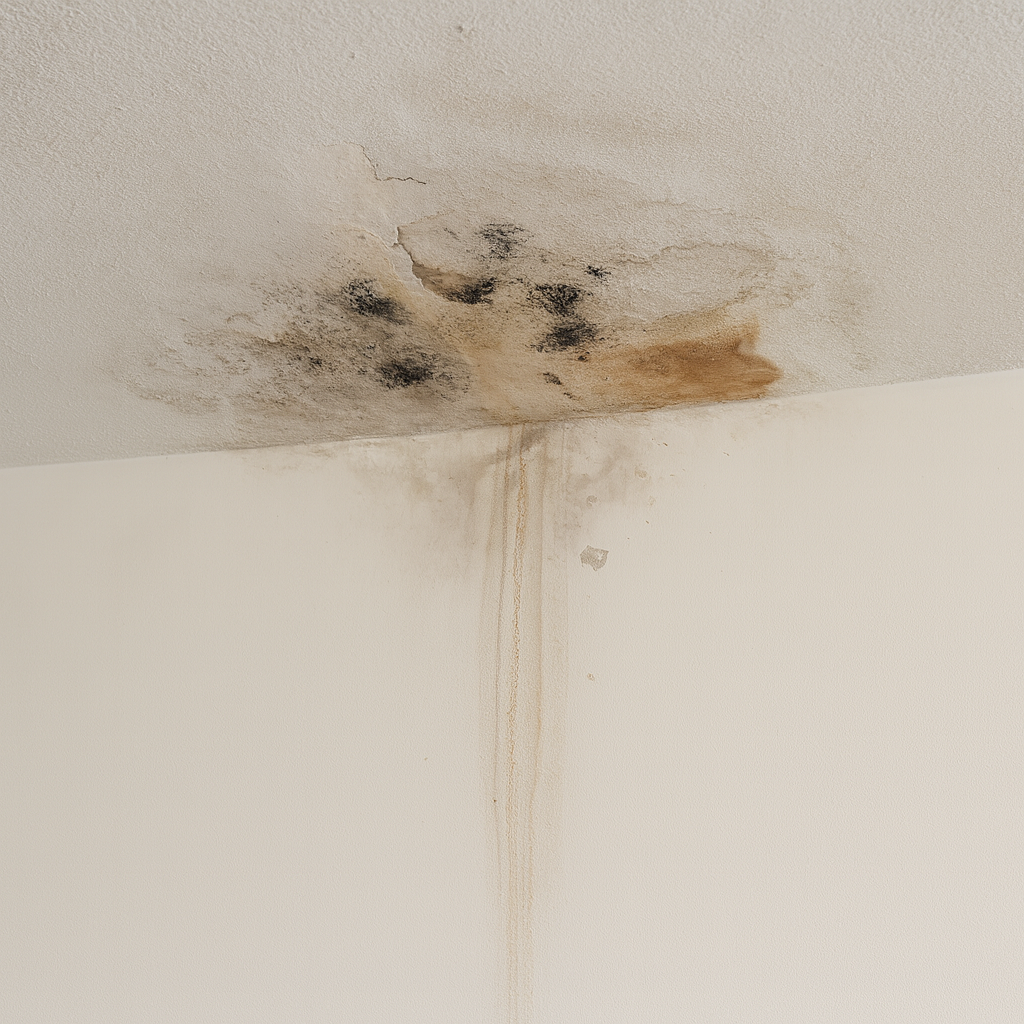
Visual Early Signs of Mold in Your Home on Walls and Ceilings
Drywall and ceiling texture show moisture damage clearly once you know what to look for, and the earliest visual signs are subtle. Watch for faint discoloration that spreads outward in an irregular shape, often tan, yellow, or light brown at first before darker growth appears. Paint that bubbles, blisters, or develops a wavy texture is reacting to moisture trapped behind the film, and that trapped moisture is a reliable mold trigger. Wallpaper seams that lift or curl in one specific area point to the same problem. Ceilings near bathrooms, kitchens, and the base of roof valleys deserve extra attention because those areas collect water from above. A ring shaped stain with a defined edge usually means an event that has dried; a soft, spreading stain with no clear border often means water is still arriving.
Baseboards and trim tell the story from the bottom up when moisture wicks through the floor or the lower wall cavity. Look for paint separating from the wood, dark lines along the bottom edge, or nails that have started to rust and bleed through the finish. Gently press the drywall a few inches above the floor along exterior walls and under windows, and note any spot that feels soft, spongy, or crumbly. Corners where two exterior walls meet run colder than the rest of the room, so condensation and early growth show up there first in many homes. Furniture pushed tight against those walls blocks airflow and creates a microclimate that holds humidity. Pulling the couch away from the wall once a season and checking behind it takes two minutes and catches problems that stay hidden for months.
Not every stain is mold, and knowing the difference saves you money and worry. Efflorescence, a white crystalline residue found on masonry and concrete, is mineral salt left behind by evaporating water, and it brushes off as powder rather than smearing. Soot from candles or a fireplace collects in streaks along ceilings and near HVAC vents in a pattern that follows air movement. True mold growth usually has dimension when you look at it closely, appearing raised, fuzzy, or clustered rather than flat. What all of these share is the same underlying message: water has been present where it should not be. Toro Construction offers free inspections and honest recommendations, so you get a straight answer instead of a sales pitch. Suspect moisture behind your walls? Click here for our water restoration services.
Early Signs of Mold in Your Home Around Windows, Bathrooms, and Floors
Windows are one of the most reliable places to catch the early signs of mold in your home because condensation collects there first. Check the bottom sash, the corners of the glass, and the sill each morning during humid stretches and again during the first cold snaps of fall. Black speckling in the caulk joint or along the sill is common and often dismissed as dirt, though it is usually growth feeding on dust and moisture. Wood window frames that feel soft when pressed with a thumbnail have absorbed water over time and need attention beyond a wipe down. Failed seals in double pane glass show up as fog between the panes and drive up interior condensation. Fixing the moisture source matters more than scrubbing the surface, since the growth simply returns without it.
Bathrooms combine heat, steam, and enclosed space, which makes them the most predictable mold location in any house. Grout lines that darken unevenly, caulk that turns gray or pink, and ceiling paint that develops small dots above the shower all count as early warnings. Exhaust fans should pull moisture completely outside the building; a fan that vents into the attic simply moves the problem to a place you never look. Test your fan by holding a single square of toilet paper against the grille, which should hold in place while the fan runs. Run the fan during every shower and for at least twenty minutes afterward to clear residual humidity. Under sink cabinets deserve a monthly check with a flashlight, since a slow supply line drip can soak the cabinet base for weeks without ever reaching the floor.
Flooring hides moisture well, and the signals it gives are easy to misread as normal wear. Hardwood that cups, crowns, or develops gaps between boards is responding to water in the subfloor. Laminate edges that swell and feel rough, vinyl planks that lift at the seams, and tile grout that stays dark long after cleaning all suggest water underneath. Carpet holds the clearest clue of all in its padding, which can stay saturated for days while the surface feels only slightly damp. If a section of carpet smells musty when you press a towel into it, the padding beneath is very likely compromised. Water damaged materials can begin supporting mold growth in as little as twenty four to forty eight hours, which is why fast drying matters more than any cleaning product you can buy.
Where Hidden Moisture Creates Early Mold Growth in Your Home
Visible growth is only the final step in a chain that starts with water getting somewhere it does not belong. Finding and stopping that water source is the single most important part of any mold response, because remediation without a repair guarantees the problem returns. Most sources fall into a few predictable categories: the roof and exterior envelope, plumbing and appliances, and general humidity paired with poor ventilation. Arkansas homes face all three, with a humid climate, an active storm season, and a housing stock that spans many decades of construction standards. A methodical search through attics, crawl spaces, and utility areas usually finds the culprit faster than guesswork. Knowing the common failure points helps you check the right places instead of tearing into the wrong wall.
Roof Leaks That Create Early Mold Growth in Your Home
Roof leaks are among the most common causes of early mold growth in your home, and they seldom appear where the water actually enters. Water travels along decking, rafters, and top plates before it finds a place to drop, so a ceiling stain in a hallway may trace back to a flashing failure twenty feet away. Storm damage accelerates this process, since wind lifted shingles, cracked seals around nails, and hail bruising all open small paths that leak slowly for months. Valleys, chimneys, skylights, plumbing boots, and roof to wall transitions account for a large share of residential leaks because each one relies on flashing to stay watertight. Rubber plumbing boots in particular dry out and crack under sustained sun exposure, often failing well before the shingles reach the end of their life. Checking your attic with a flashlight after heavy rain is the fastest way to catch a leak while it is still small.
Attic inspections give you information no ground level view can provide. Look at the underside of the roof decking for dark staining, streaking that runs with the grain of the wood, or a white and gray film across the sheathing. Wet or compressed insulation, rusted nail tips, and water lines on rafters all point toward active intrusion. Damp insulation loses much of its ability to resist heat transfer, which raises your energy bills at the same time it holds moisture against wood framing. Bring a moisture meter if you have one, though your hands and eyes will find most problems on their own. Anything that feels damp several days after the last rain deserves immediate follow up.
Gutters and drainage play a supporting role that homeowners often overlook. Clogged gutters push water back under the shingle edge and over the fascia, which soaks the roof deck and the wall below at the same time. Downspouts that discharge next to the foundation drive water toward crawl spaces and slab edges, raising humidity throughout the lower level of the house. Falling leaves in September and October make this a seasonal priority, since a gutter that worked all summer can pack solid within a few weeks. Clearing gutters twice a year and extending downspouts several feet away from the house prevents a large share of moisture problems. Need a roof inspection before the fall storm season picks up? Click here for our roofing services.
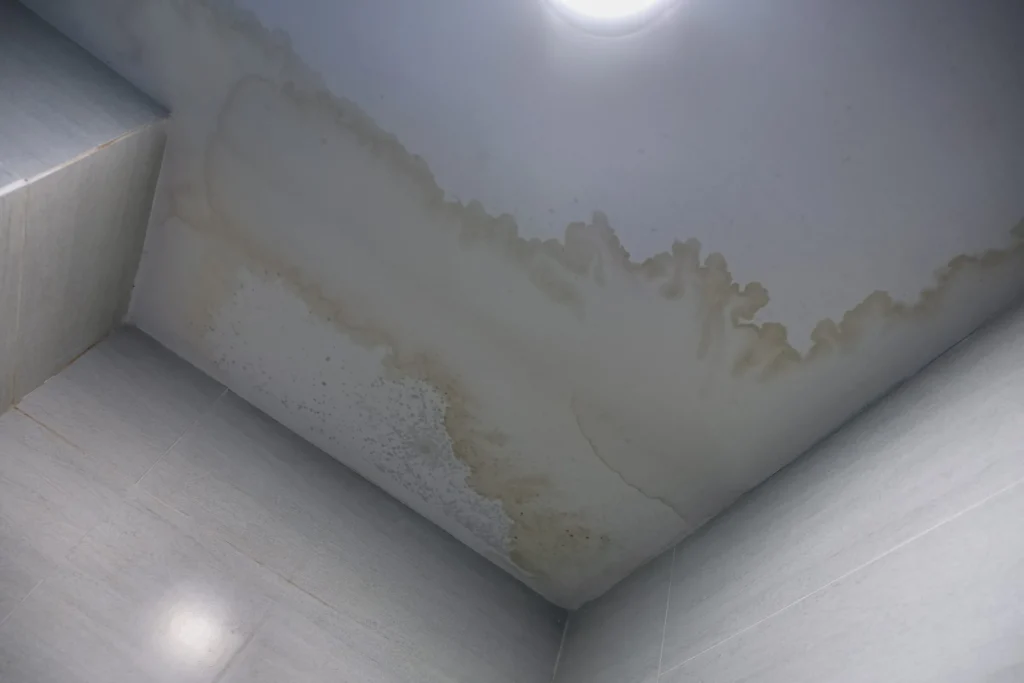
Plumbing and Appliance Leaks That Create Early Mold Growth in Your Home
Plumbing failures create early mold growth in your home faster than almost any other source because the water supply never stops. Supply lines under sinks, at toilets, and behind washing machines can weep small amounts for months while staying entirely out of sight. Braided stainless steel supply lines age from the inside and should be replaced roughly every five to eight years as a preventive measure. Toilet flanges and wax rings fail quietly, sending water into the subfloor around the base while the bowl looks perfectly normal. A toilet that rocks even slightly when you sit down has likely broken its seal and needs attention. Drain lines in wall cavities leak only when water flows through them, which is why some stains appear and disappear on a schedule that seems random.
Appliances add a second layer of risk because they combine water lines, drain lines, and heat. Water heaters typically last eight to twelve years, and the first sign of tank failure is often a small amount of moisture on the floor near the base. Refrigerator ice maker lines run behind the unit where nobody looks, and a slow drip there can destroy the flooring under the fridge before anyone notices. Dishwashers leak at the door gasket and at the drain hose connection, saturating the cabinet base and the adjoining floor. Washing machine hoses are the highest volume risk in most homes, since a failure while you are away can release hundreds of gallons. Pulling appliances out once a year for a look behind them takes very little time and prevents very expensive repairs.
Your water meter offers a simple test for hidden leaks that costs nothing. Turn off every fixture and appliance in the house, note the meter reading, and check it again after two hours with no water use. Any movement means water is escaping somewhere in the system, and the search should begin immediately. An unexplained jump in your monthly water bill deserves the same investigation, since gradual increases often track a leak that is slowly getting worse. Water damage rarely stays contained to the room where it started, because gravity and capillary action move it through framing and into adjacent spaces. Fast professional drying with commercial air movers and dehumidifiers stops mold before it begins. Dealing with a leak or flood right now? Click here for water restoration in Bentonville.
Humidity, Attics, and Crawl Spaces That Create Early Mold Growth in Your Home
Humidity alone can create early mold growth in your home without a single drop of leaking water. Indoor relative humidity above sixty percent supports growth on dust, drywall paper, wood, and fabric, and Arkansas summers push many homes past that mark for weeks at a time. Keeping indoor humidity between thirty and fifty percent is the general standard recommended for healthy indoor air, and an inexpensive hygrometer lets you monitor it in real time. Air conditioning removes moisture as it cools, though an oversized system short cycles and shuts off before it does much dehumidifying. Portable dehumidifiers help in problem rooms, and whole home units serve larger spaces more efficiently. Simple habits matter too, including running exhaust fans, covering pots while cooking, and avoiding indoor drying of laundry.
Attics need balanced ventilation to release the heat and moisture that rise from the living space below. Intake at the soffits paired with exhaust at the ridge creates continuous airflow that carries humid air out of the assembly. Blocked soffit vents, often caused by insulation pushed into them during an upgrade, shut that system down and trap moisture against the decking. Bathroom and dryer vents that terminate in the attic instead of outside dump enormous amounts of water vapor into an enclosed space. In that environment, the underside of the roof deck becomes a prime surface for growth, and homeowners typically discover it only during a roof replacement or a real estate inspection. An annual attic check with a flashlight, done in the morning before the space heats up, catches most of these issues early.
Crawl spaces present the same challenge from below, and many Arkansas homes have them. Bare soil releases moisture continuously into the crawl space, where it condenses on cool ductwork, floor joists, and subflooring. A properly installed vapor barrier across the ground substantially reduces that transfer and is one of the highest value improvements available for an older home. Standing water, sagging insulation hanging from the joists, and a strong earthy smell rising through floor registers all signal a crawl space problem. Grading around the house should slope away from the foundation so rainwater moves out rather than in. Correcting drainage, sealing the ground, and improving airflow together solve most chronic humidity problems at their root.
Why You Need Professional Mold and Water Restoration Help Early
Small surface growth on a nonporous material is often something a homeowner can clean safely, and federal guidance generally treats areas under about ten square feet as manageable without a contractor. Beyond that size, or any time growth involves drywall, insulation, framing, or HVAC systems, the job calls for trained professionals with containment equipment and negative air machines. Improper cleaning disturbs colonies and sends spores throughout the house, turning a contained problem into a whole home issue. Killing mold is also not the same as removing it, since dead spores still trigger reactions and dormant colonies revive the moment moisture returns. Professional remediation removes affected material, dries the structure to documented standards, and addresses the moisture source so the problem does not repeat. Acting early keeps the scope small, the timeline short, and the cost far more predictable.
What Professional Mold and Water Restoration Includes
A professional response begins with assessment rather than demolition, because finding the moisture source determines everything that follows. Technicians use moisture meters, thermal imaging, and hygrometers to map how far water has traveled through building materials. Containment barriers and negative air pressure keep spores from spreading into clean areas while work is underway. Affected porous materials such as drywall, carpet padding, and insulation are removed and disposed of properly, since these cannot be reliably cleaned once colonized. Structural drying then brings wood and framing back to normal moisture content using commercial air movers and dehumidifiers.
Documentation runs through the entire process and protects you in several ways. Daily moisture readings show that the structure actually reached a dry standard rather than simply looking dry on the surface. Photographs and written logs support your insurance claim and give you a clear record of what was done. IICRC certification means our technicians follow recognized industry standards for water damage restoration and mold remediation. That training covers containment, drying science, and the safe handling of contaminated materials. Homeowners get a process built on established practice instead of improvisation.
Reconstruction closes the loop and returns your home to normal. Drywall, insulation, trim, flooring, and paint all need to go back correctly for the repair to hold up over time. Working with one company through both phases eliminates the gap that often appears when a drying crew leaves and a separate contractor has to be found. Toro Construction handles roofing, restoration, and remodeling under one roof, so the same team that dried your home rebuilds it. Financing options are available for larger projects, which helps when a repair arrives without warning. Planning a rebuild after water damage? Click here for our home remodeling services.

Why Waiting on Mold and Water Restoration Costs More
Time works against you in every moisture situation, and the math is straightforward. Wet materials can begin supporting growth within twenty four to forty eight hours, which turns a drying job into a remediation job in a single weekend. Each day of delay expands the affected area as water wicks along framing and into adjacent rooms. What starts as one wet closet becomes a hallway, then a bedroom, then a section of subfloor that has to be cut out and replaced. Costs scale with square footage and with the number of trades required to finish the repair.
Structural consequences accumulate quietly in the background. Sustained moisture weakens wood, corrodes fasteners, degrades insulation performance, and can attract termites and other pests that prefer damp conditions. Subfloor delamination and joist rot lead to soft floors and repairs that reach well beyond cosmetic work. Persistent humidity also strains HVAC equipment, since the system runs longer trying to condition air it cannot dry. Correcting these problems later always costs more than addressing the water in the first week.
Insurance and resale add practical pressure to move quickly. Many policies cover sudden and accidental water damage while excluding damage that resulted from long term neglect, and a delayed claim can raise questions about which category applies. Prompt documented action supports your position and speeds up the process. Mold discovered during a home inspection can also stall a sale or force a price reduction at the worst possible moment. Our 24/7 emergency service exists because water problems do not keep business hours, and a call at midnight often saves thousands of dollars.
Why Choose Toro Construction for Mold and Water Restoration in Arkansas
Toro Construction has served Arkansas homeowners since 2002, and more than twenty years in this climate has taught us exactly where local homes fail. We are licensed and insured in Arkansas, IICRC certified for water restoration, and experienced in fire restoration as well. Our crews work throughout Bentonville, Rogers, Bella Vista, Centerton, Springdale, Fayetteville, Fort Smith, and the surrounding communities. Free inspections come with honest recommendations, not pressure to buy work you do not need. When a repair is small, we tell you it is small.
Strong communication runs through every project we take on. You will know what we found, what it will take to fix, what it will cost, and how long it should take before work begins. Reliable timelines and organized project management keep the job moving instead of stalling between phases. Qualifying projects carry a twenty year craftsmanship warranty, which reflects our confidence in the materials and methods we use. Residential and commercial customers both get the same standard of care.
Having one team for roofing, restoration, and remodeling removes the most frustrating part of recovering from water damage. There is no finger pointing between contractors and no waiting while someone else fits you into a schedule. We are a community focused company that believes in giving back to the region we work in, and that shows up in how we treat every homeowner. Call Toro Construction at (479) 877-7121 or email info@toroconstructionco.com to schedule an inspection. Our office is located at 3604 NW Frontage Rd Suite 6, Bentonville, AR 72712, and we are ready when you need us.