
Heavy rain in Arkansas can dump several inches of water onto your roof in a single storm. Without a working gutter system, all of that water pours straight down along the base of your home. Over time, this soaks the soil, erodes the ground, and puts serious pressure on your foundation. Gutters move that water away from the house and send it somewhere safe. Spring storms in Bentonville often bring fast, heavy rainfall, which makes gutter performance more important than many homeowners realize. A properly installed gutter system is one of the most affordable ways to protect the most expensive part of your home.
How Gutters Direct Rainwater Away From Your Foundation
Gutters work as a controlled drainage path for rainwater. When rain hits your roof, it slides down the slope and reaches the edge at high speed. The gutter catches that flow, routes it to the downspouts, and releases it several feet from the house. This simple system prevents saturation at the base of your home. In Arkansas, where clay-heavy soil expands and contracts with moisture, that protection matters even more. A functional gutter system keeps water moving in a predictable direction every time it rains.
How Gutters Direct Rainwater Off the Roofline
The roofline is the first place water wants to fall once a storm begins. Shingles are designed to shed water quickly, which means every drop eventually reaches the edge of the roof. Without gutters, that water falls in a sheet directly onto the ground below. This creates a trench effect along the drip line of your home. Over months and years, that trench gets deeper and wider, pulling soil away from the foundation. Gutters catch the water before it ever hits the ground, keeping the drip line intact and the soil stable.
A good gutter system runs the full length of every roof edge that sheds water. Seamless aluminum gutters are a common choice for Arkansas homes because they resist leaks and handle heavy rainfall well. The size of the gutter also matters, since a five-inch gutter handles standard rainfall and a six-inch gutter handles the heavier storms the region sees each spring. Gutter hangers should be spaced close enough to support the weight of water during a downpour. Proper slope is another key factor, because water needs to move toward the downspout without pooling. When all of these pieces are installed correctly, the roofline stays protected.
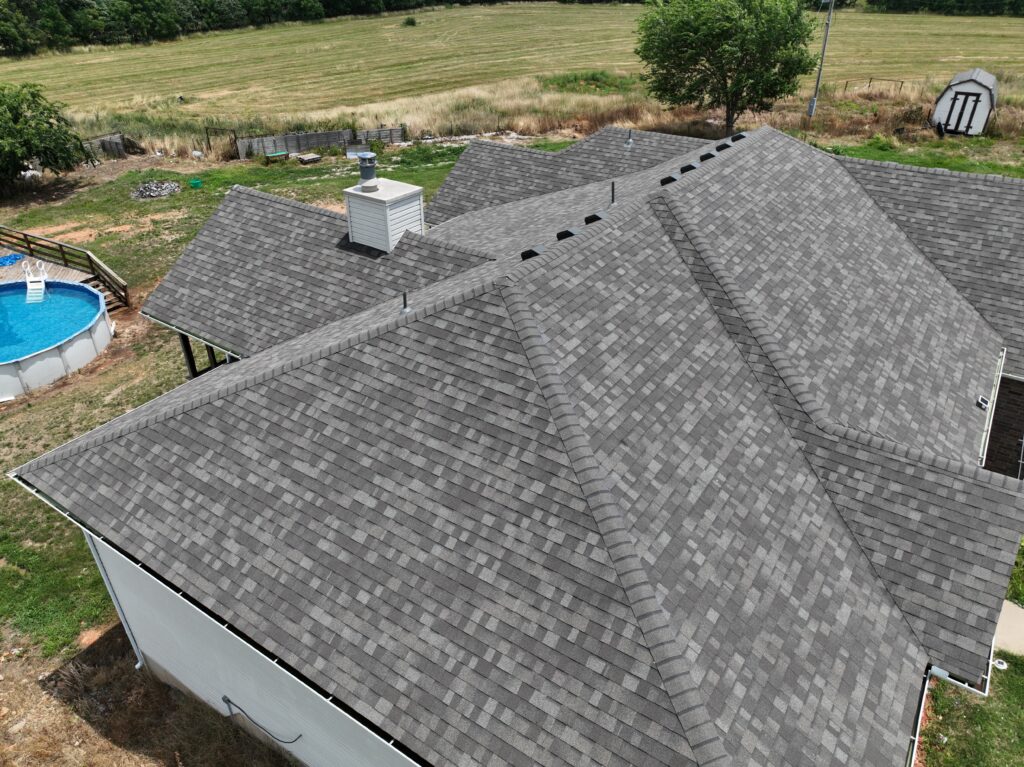
Homeowners often overlook how much rain actually comes off a roof during a storm. A 2,000 square foot roof can shed over 1,200 gallons of water during just one inch of rainfall. That volume moves fast and hits hard if there is nothing to catch it. Gutters turn that chaos into a controlled stream that drains safely away. This is the foundation of keeping your actual foundation dry. Need a new gutter system installed on your home? Click here for our roofing and exterior services.
How Gutters Direct Rainwater Through the Downspouts
Downspouts are the vertical pipes that carry water from the gutter to the ground. They are the second half of the drainage system and just as important as the gutters themselves. A downspout needs to be sized correctly for the amount of water it handles. Most homes need one downspout for every 30 to 40 feet of gutter. Corners and long runs often require extra downspouts to prevent overflow. When downspouts are undersized or too few, water backs up in the gutter and spills over the edge.
Downspout placement also affects how well your foundation stays dry. A downspout that ends right next to the house sends all that water straight into the soil you are trying to protect. Extensions, splash blocks, and underground drains carry the water further out. In Arkansas, most homes benefit from downspout extensions that reach at least four to six feet away from the foundation. Some homes need buried drain lines that carry water even further. The goal is simple: get the water away from the house before it can soak in.
Clogs are the most common reason downspouts fail during heavy rain. Leaves, shingle grit, and twigs collect at the top of the downspout and block the flow. When that happens, the gutter fills up and overflows, sending water exactly where you do not want it. Regular cleaning keeps the system working as designed. Gutter guards can also help reduce how often downspouts get clogged. A clean downspout is a working downspout, and a working downspout protects your foundation.
How Gutters Direct Rainwater to Safe Drainage Points
The final step in the gutter system is where the water actually goes. A good drainage plan moves water to a spot that will not cause problems. This might be a lawn area that slopes away from the house, a rock bed, a French drain, or a storm drain connection. The key is that water should not pool near the house or run back toward it. Arkansas yards often have grading issues that send water in the wrong direction. A gutter system can only do so much if the landscape works against it.
Grading around the foundation should slope at least six inches over the first ten feet away from the house. When gutters discharge onto properly graded soil, water drains naturally away from the foundation. If the grading is flat or sloped toward the house, the gutter output becomes a problem instead of a solution. Homeowners can check their grading by watching where puddles form after a rainstorm. Any water collecting near the foundation is a warning sign.
Drainage points should also be spaced so they do not overwhelm one area of the yard. Sending every downspout to the same corner creates a saturated zone that can wash out landscaping and erode soil. Spreading the discharge across multiple points keeps the whole yard drier. In some cases, a catch basin or dry well handles the water underground. These systems are helpful for homes with limited yard space or heavy clay soil. A well-planned drainage path is what turns a good gutter system into a great one.
How Gutters Prevent Long-Term Foundation Damage
Foundations are built to handle steady, even pressure from the surrounding soil. When water changes that balance, problems start to appear. Saturated soil expands, dry soil shrinks, and the shifting ground pushes against the concrete. Arkansas homes see this cycle often because of the mix of clay soils and heavy seasonal rain. Gutters reduce the amount of water that reaches the soil directly against the foundation. That single change can prevent thousands of dollars in future repairs.

How Gutters Prevent Cracks in the Foundation Walls
Foundation cracks are one of the most common signs of water damage around a home. They happen when soil pressure changes repeatedly against the concrete. Wet soil pushes inward with significant force, and dry soil pulls away, leaving gaps. This back and forth stresses the foundation and creates cracks that grow over time. Without gutters, rainwater saturates the soil next to the foundation during every storm. With gutters, that water is redirected before it can cause pressure changes.
Horizontal cracks are especially concerning because they often point to water pressure from the outside. Vertical cracks can also form as the soil shifts and settles unevenly. Both types allow water to enter the basement or crawl space, which leads to more damage inside the home. Once water gets inside, it can damage insulation, framing, flooring, and stored belongings. Gutters stop the problem at the source by keeping the soil conditions stable. Stable soil means a stable foundation.
Foundation repairs are expensive, often costing tens of thousands of dollars in severe cases. Gutter installation and maintenance is a fraction of that cost. Investing in a quality gutter system pays for itself by preventing the conditions that lead to cracks. Homeowners who notice new cracks forming should also check their gutter performance. A clogged, missing, or damaged gutter is often the hidden cause. Fixing the gutter early stops the damage from getting worse.
How Gutters Prevent Basement and Crawl Space Flooding
Basements and crawl spaces are the first parts of the home to show water problems. When soil around the foundation stays saturated, water finds its way through cracks, joints, and porous concrete. Even small amounts of water entering these spaces can cause major issues. Mold grows quickly in damp conditions, and wood framing begins to rot. Heating and cooling systems located in crawl spaces are also at risk. Gutters keep the soil drier, which keeps these areas drier as well.
Arkansas homes with crawl spaces are especially vulnerable during heavy spring rain. Water can pool under the home and stay there for weeks without proper drainage. This creates a damp environment that affects the entire house, even the upstairs rooms. Musty odors, high humidity, and sagging floors are all signs of a wet crawl space. Many of these issues trace back to poor gutter performance or missing downspout extensions. Fixing the gutter system often fixes the crawl space problem too.
If your home has already experienced water intrusion from heavy rain, professional restoration may be needed. Mold, saturated insulation, and damaged framing all require proper cleanup before the space is safe again. Need help with water damage from flooding? Click here for our water restoration services. Fast action makes a big difference in how much of the home can be saved. The sooner water is removed, the lower the long-term cost.
How Gutters Prevent Soil Erosion Around the Home
Soil erosion is the slow washing away of dirt from around the foundation. It happens every time water falls from the roof and splashes onto the ground below. Over many storms, this creates channels, bare patches, and uneven ground. Erosion weakens the soil that supports the foundation and the landscaping around the home. Plants die, mulch washes away, and walkways begin to sink. Gutters stop this by catching the water before it ever hits the ground.
Erosion is especially damaging on sloped lots, which are common in the Bentonville and Bella Vista areas. Water picks up speed as it flows downhill, carrying soil with it. A properly designed gutter system directs that water to stable drainage points instead of letting it run freely. This protects the landscape and the foundation at the same time. Retaining walls, garden beds, and driveways all last longer when erosion is controlled. The whole property benefits from good gutter performance.
Erosion can also expose the foundation itself, leaving concrete visible that was originally buried. Once the foundation is exposed, it becomes more vulnerable to freeze-thaw damage during Arkansas winters. Ice forms in small cracks, expands, and makes them larger. This is how small problems turn into major repairs. Gutters prevent the erosion that starts the whole cycle. Keeping soil in place keeps the foundation protected for decades.
Why You Need a Professional Gutter System From Toro Construction
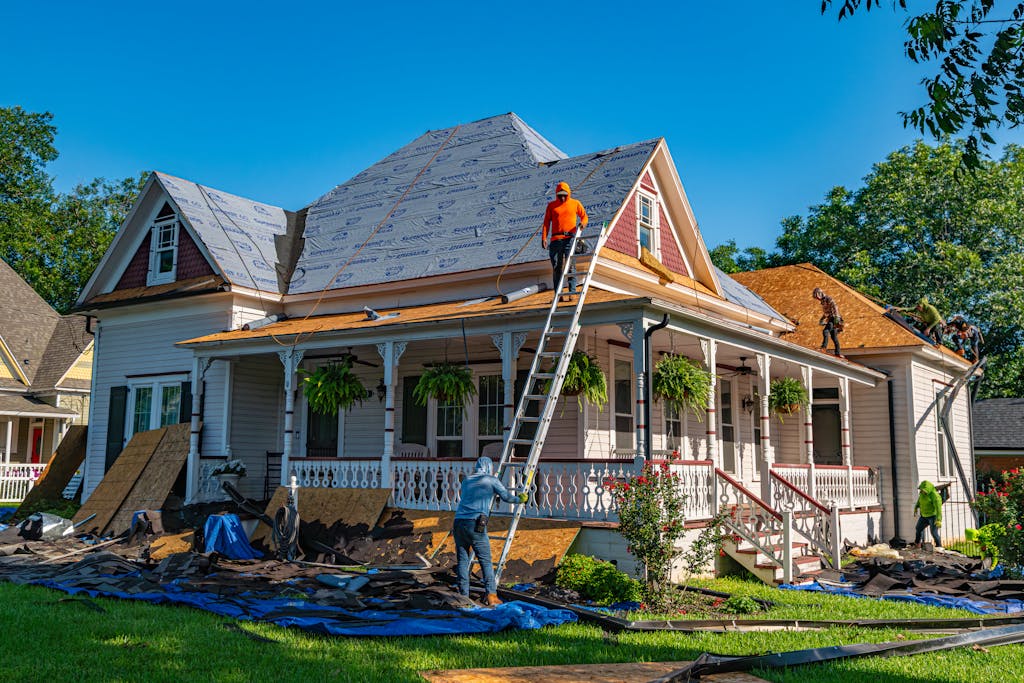
A gutter system is only as good as its installation. Poorly hung gutters, wrong-sized downspouts, and bad slope cause more problems than they solve. Toro Construction installs gutter systems that are built to handle Arkansas rainfall and last for years. Our team knows how to match the right gutter size to your roof area, place downspouts where they work best, and route drainage away from your foundation. We serve homeowners across Bentonville, Rogers, Bella Vista, Fayetteville, and the surrounding areas. When you need gutters done right, we are ready to help.
Why You Need Expert Gutter Installation
Professional installation makes the difference between a gutter system that works and one that fails. Hangers must be placed at the correct spacing, with the right slope toward each downspout. Seams need to be sealed properly to prevent leaks. Corners and miters require careful fitting so water flows smoothly through the system. Our team handles all of these details on every job. The result is a gutter system that performs during even the heaviest Arkansas storms.
Seamless gutters are our preferred choice for most homes because they reduce leaks and look cleaner along the roofline. We form the gutters on site to match the exact length of your roof edges. This removes the weak points that come with sectional gutters. Color options are available to match your home, and multiple gauges of aluminum are available for different durability needs. Homes with heavy tree coverage may also benefit from gutter guards, which we can install at the same time. Every system is designed for the specific home it is protecting.
Quality materials matter just as much as quality installation. Thin gutters bend under the weight of water and debris, while heavier gauges hold up for decades. We use materials that meet industry standards and stand up to Arkansas weather. Fasteners, sealants, and downspout components are all selected for long-term performance. A gutter system installed this way protects your home through countless storms. It is an investment that pays off every time it rains.
Why You Need Regular Gutter Maintenance
Even the best gutter system needs maintenance to keep working. Leaves, twigs, shingle grit, and pine needles all collect in gutters over time. Left alone, this debris turns into a clog that blocks water flow. A clogged gutter overflows during rainstorms, sending water directly to the foundation. This is the exact problem the gutters were meant to prevent. Regular cleaning keeps the system working as designed.
Most homes in Arkansas need gutter cleaning at least twice a year. Spring cleaning removes the buildup from winter and prepares the system for heavy rains. Fall cleaning clears out leaves before they freeze in place during winter. Homes with many trees nearby may need cleaning more often. Gutter guards reduce how much debris gets in but do not eliminate the need for maintenance completely. Checking the gutters a few times a year catches problems before they cause damage.
Maintenance is also a chance to inspect the gutters for damage. Loose hangers, separated seams, and sagging sections all reduce performance. Catching these issues early means simple repairs instead of full replacement. Downspouts should also be checked to make sure they are clear and draining properly. Our team can handle inspections and repairs as part of a complete gutter service. Keeping up with maintenance extends the life of the system and protects the home.
Why You Need to Choose Toro Construction for Your Gutter Project
Toro Construction has served Arkansas homeowners since 2002, with more than 20 years of experience in roofing and exterior work. We are licensed and insured in Arkansas, so homeowners have peace of mind on every project. Our team offers a 20-year craftsmanship warranty on qualifying projects, which reflects the quality of work we deliver. Free inspections and honest recommendations are part of how we do business. We never push work that is not needed.
Strong communication is something we take seriously from start to finish. Homeowners know what is happening at every step of the project, from the first inspection to the final walkthrough. Reliable timelines and organized project management keep everything running smoothly. Financing options are available for larger projects, which makes quality work more accessible. One team handles your roofing, gutters, and exterior needs, which saves time and reduces hassle. We treat every home like it is our own.
Community matters to us, and we are committed to giving back to the Arkansas neighborhoods we serve. We use high quality materials and proven installation methods on every project. Our focus is on protecting and increasing the value of your property for the long term. Ready to protect your foundation with a professional gutter system? Click here to learn more about our roofing and exterior services. Call (479) 877-7121 to schedule your free inspection today.