
An electrical fire changes a house in minutes, and the damage almost never stops at the room where the flames started. Wiring inside walls can overheat and burn behind drywall, so the visible scorch marks usually represent a small fraction of the real problem. Smoke from burning wire insulation carries acidic residue that settles on ceilings, cabinets, clothing, and electronics far from the origin point. Water used to knock the fire down soaks into flooring and framing, and it begins feeding mold growth within roughly 24 to 48 hours. Fall in Northwest Arkansas brings heavier electrical loads as families switch on space heaters, run HVAC systems longer, and string up holiday lighting on circuits that were already near capacity. Homeowners in Bentonville, Rogers, and Springdale call us with the same question every year, which is what needs to happen first. This guide walks through the full restoration process, from the first hour after the fire department pulls away to the final inspection on rebuilt rooms.
What Electrical Fire Damage Does to a Home
Electrical fire damage behaves differently than a kitchen grease fire or a chimney fire because it starts inside the building envelope rather than out in the open. A failing outlet, an overloaded circuit, a loose connection in a junction box, or a damaged conductor generates heat in a concealed space where nobody can see it. By the time smoke reaches a detector, heat has often traveled along wiring runs, framing cavities, and top plates into other parts of the house. The residue left behind is corrosive, and it keeps attacking metal, glass, and finished surfaces long after the fire is out. Structural members may be charred in ways that reduce their load capacity without looking dramatic to an untrained eye. Understanding the full scope of what happened is the only way to build an accurate repair plan and an accurate insurance claim.
How Electrical Fire Damage Spreads Beyond the Origin Room
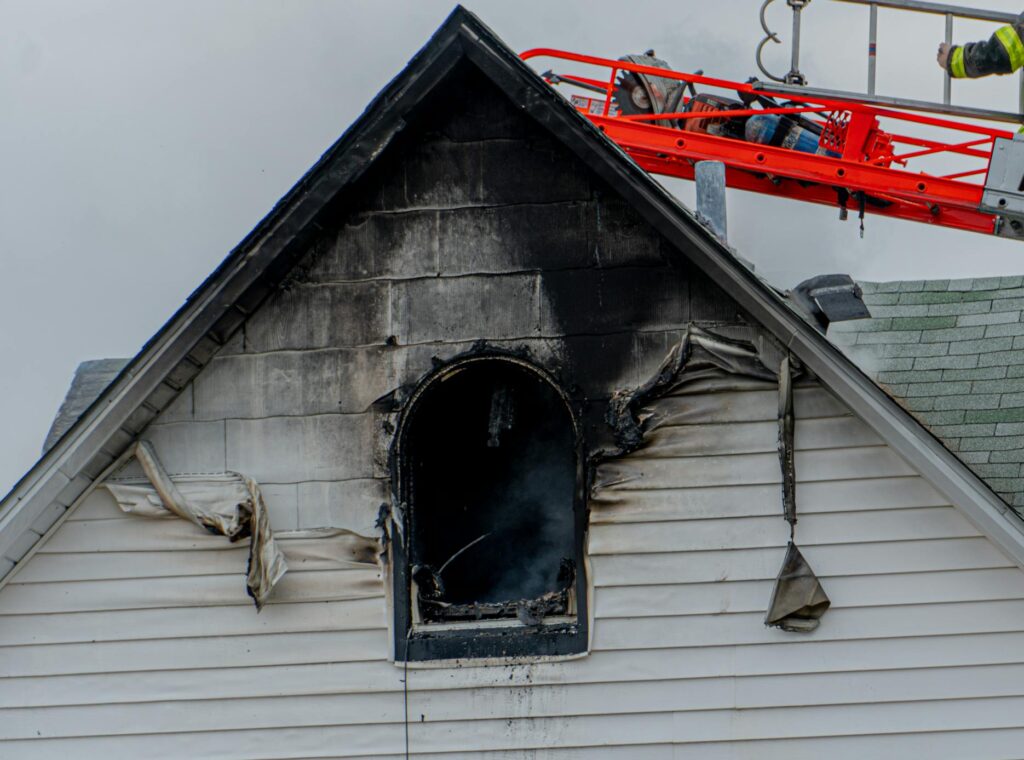
Fire follows the path of least resistance, and in a modern home that path usually runs vertically through wall cavities, chases, and soffits before it ever burns through a finished surface. When a circuit fails inside a wall, the heat and flame travel upward along studs and can enter the attic through gaps around wiring penetrations and plumbing stacks. Once flame reaches an attic, it has access to open framing, insulation, and a large volume of oxygen, which is why so many electrical fires that start in a bedroom outlet end up compromising the roof structure. Firefighters cut ventilation holes in the roof deck to release heat and smoke, and those openings need immediate tarping to keep autumn rain out of the house. Smoke moves even faster than flame because pressure differences push it through every crack, register, and door undercut in the building. Central HVAC systems make this worse by drawing smoke into return ducts and redistributing it across the entire home. A homeowner standing in an untouched bedroom on the far side of the house will still smell the fire, and that smell is physical residue sitting on surfaces.
Concealed damage is the part that catches people off guard during the first walk through with an adjuster. Drywall may look intact from the living room while the back side of that same sheet is scorched and the paper facing has been cooked to the point of failure. Insulation absorbs smoke and holds odor indefinitely, so batts and blown in insulation in affected cavities generally need removal rather than cleaning. Electrical wiring exposed to sustained heat can suffer insulation damage that does not show on the outer jacket, which creates a genuine shock and fire risk if that circuit is simply re energized. Metal components including hinges, fasteners, ductwork, and appliance housings begin corroding quickly when chloride residue from burned PVC insulation settles on them. Windows and mirrors can be permanently etched by acidic smoke if the residue sits for more than a few days. This is exactly why speed matters so much in the days right after a fire.
Assessment work should always be documented before anything gets cleaned or torn out. Our teams photograph every affected room, map the smoke travel path, take moisture readings in materials that absorbed suppression water, and note the condition of framing in any area that saw direct flame contact. Thermal imaging helps identify moisture behind finishes and can flag areas of a wall that held heat longer than the surrounding assembly. We also inspect the electrical panel, the service entrance, and the branch circuits tied to the origin point, because damage frequently extends back toward the source. Older homes across Benton and Washington counties sometimes still contain aluminum branch wiring installed between roughly 1965 and 1973, ungrounded two prong receptacles, or panels that are known to fail, and any of those conditions changes the repair scope significantly. A thorough inspection also protects the homeowner during the claims process by creating a written record of conditions before demolition begins. Skipping this step almost always costs money later.
The Smoke and Soot Left Behind by Electrical Fire Damage
Not all smoke residue is the same, and the cleaning method has to match the residue type or the work simply spreads the problem around. Electrical fires typically produce dry smoke from fast burning synthetic materials along with heavy residue from burning PVC wire insulation, thermoplastics, and appliance housings. That plastic content releases hydrogen chloride, which combines with moisture in the air and on surfaces to form an acidic film. The film is what corrodes chrome fixtures, tarnishes silver, pits stainless steel, and eats into the internal contacts of electronics that were never touched by flame. Soot particles from this kind of fire are extremely fine, so they penetrate porous materials and slip into places like light fixtures, outlet boxes, and the interior of a refrigerator. Wiping with a wet rag on the wrong surface can drive residue deeper into the substrate and set a stain permanently. Getting the sequence right is the difference between a restored surface and a replaced one.
Professional cleaning follows a specific order that starts dry and moves to wet only when the residue calls for it. Technicians begin with HEPA filtered vacuums to lift loose particulate without pushing it airborne, then move to dry chemical sponges that pull dry soot off walls, ceilings, and trim through absorption rather than smearing. Surfaces with oily or sticky residue get alkaline degreasers and detergent solutions matched to the finish, applied with controlled agitation and immediate rinsing. Contents such as clothing, bedding, and upholstery are inventoried and either cleaned on site or sent out for specialized processing, since normal laundering rarely removes embedded smoke odor. Hard contents including dishes, tools, and furniture are cleaned individually, and anything with electrical components is evaluated by a qualified technician before it gets plugged back in. Air scrubbers with HEPA and carbon filtration run continuously throughout the process to capture particulate that becomes airborne during cleaning. Negative air containment keeps the working area separated from clean parts of the house so cross contamination does not undo finished work.
Odor removal is its own phase, and it fails whenever anyone tries to shortcut it with air fresheners or sealers applied over dirty surfaces. Residue has to be physically removed first, because odor molecules live in the soot and in the porous materials that absorbed it. Ductwork almost always needs professional cleaning after an electrical fire, since the HVAC system carried smoke into rooms that never saw flame. Charred framing is cleaned by media blasting or wire brushing to remove the loose char layer, then sealed with a shellac based or specialty encapsulating primer that locks residual odor into the wood. Hydroxyl generators can run safely in occupied structures and neutralize odor over a period of days, while ozone treatment works faster but requires the space to be completely unoccupied by people, pets, and plants. Thermal fogging reopens the same pores that heat opened during the fire and delivers a counteractant into those pores. A home that still smells like smoke six months later is a home where one of these steps got skipped.
Water and Structural Problems That Follow Electrical Fire Damage
Almost every fire response leaves water behind, and the volume is larger than most homeowners expect. A single attack line can deliver well over 100 gallons per minute, so even a fire controlled in ten minutes puts an enormous amount of water into a structure. That water runs downhill through wall cavities, soaks subfloor and framing, saturates insulation, and pools in basements and crawl spaces where nobody sees it right away. Mold growth can begin in as little as 24 to 48 hours on wet cellulose materials such as drywall paper, wood, and carpet padding. Cool, damp fall weather in Arkansas slows natural drying, which extends the window during which microbial growth takes hold. Combining fire cleaning with structural drying in one coordinated plan prevents a second disaster from developing inside a house that already suffered a first one. Dealing with water damage after a fire? Click here for our water restoration services.
Proper drying is a measured process rather than a matter of setting out a few fans and waiting. Technicians take moisture readings with penetrating and non penetrating meters, establish dry standards from unaffected areas of the same materials, and calculate how much dehumidification and airflow the space actually requires. Unsalvageable materials come out first, since drying saturated drywall and wet insulation wastes days that the structure does not have. Commercial dehumidifiers pull moisture out of the air while air movers push evaporation off wet surfaces, and readings get logged daily until materials return to their dry standard. Cavity drying systems can reach inside wall assemblies without demolishing every wall in the room, which preserves finishes that would otherwise be removed. Hardwood flooring, tile substrates, and framing all dry at different rates, so equipment placement gets adjusted throughout the process. Documentation of these readings matters for the insurance file and for the homeowner’s own peace of mind.
Structural evaluation happens alongside the drying work. Charring reduces the effective cross section of a wood member, and a joist or rafter that lost a meaningful portion of its depth can no longer carry its designed load. Light surface charring on framing is often acceptable after cleaning and sealing, while deep charring, checking, or loss of section requires sistering or full replacement. Roof decking exposed to flame or to ventilation cuts needs replacement along with the affected sheathing, underlayment, and shingles. Steel connectors, joist hangers, and fasteners that were exposed to high heat should be inspected because heat changes the properties of the metal. Masonry and concrete can spall when heated rapidly and then cooled by suppression water, which leaves surface damage that needs evaluation. We coordinate with a structural engineer when the situation calls for it, and we would rather bring one in early than guess about something that holds up a roof.
The Step by Step Process for Restoring a Home After Electrical Fire Damage
Restoration works best as a sequence rather than a scramble, and every phase depends on the one before it finishing correctly. The first 24 hours are about safety, security, and stopping additional damage from occurring. The following week focuses on documentation, demolition of unsalvageable materials, drying, and content handling. After that comes cleaning, odor treatment, and electrical evaluation, all of which have to be complete before any new material goes back into the house. The rebuild phase then restores the home to its previous condition or better, with permits and inspections handled properly. Homeowners who understand this order can make faster decisions and avoid paying twice for the same work. Dealing with fire damage right now? Click here for our fire restoration services.
Emergency Response and Board Up After Electrical Fire Damage
The property has to be secured before anything else happens. Fire departments cut ventilation openings, break windows, and force doors, and all of those openings leave a house exposed to weather, animals, and theft. Board up crews cover broken windows and doors with plywood, and roof tarping seals ventilation cuts and burn through areas against rain. Utilities require attention immediately, and the electrical service to affected circuits should stay off until a licensed electrician has evaluated the system. Gas service may also need to be shut off and later restored by the utility or a qualified technician. Temporary power and temporary lighting let restoration crews work safely in a building with a compromised electrical system. Toro Construction runs emergency service around the clock for exactly this reason, because a home sitting open overnight during a fall storm accumulates damage by the hour.
Once the structure is secure, the assessment and documentation phase begins in earnest. We photograph and video the entire property, room by room, including areas that appear unaffected, since smoke travel needs to be documented to be covered. Contents get inventoried, and items that can be salvaged are separated from items that are total losses. Moisture mapping identifies every wet area, and readings are recorded as a baseline for the drying plan. The scope of work is then written and priced so the homeowner and the insurance carrier are looking at the same document. Clear communication at this stage prevents most of the disputes that make restoration projects miserable. Homeowners always receive a copy of the documentation, because it belongs to them.
Demolition follows, and it should be surgical rather than aggressive. Materials that cannot be cleaned or dried come out, which typically includes saturated drywall, wet insulation, damaged flooring, and any framing that failed inspection. Cutting drywall to a consistent height above the water line creates a clean line for the rebuild and makes the repair invisible when it is finished. Debris removal has to account for materials that may require special handling, and homes built before 1980 need testing before disturbing suspect materials. Containment barriers and negative air machines stay in place throughout demolition so dust and residue do not migrate into clean areas. Salvageable finishes get protected with plastic and floor coverings rather than being written off out of convenience. Careful demolition saves the homeowner real money on the rebuild side.

Cleaning and Odor Removal During Electrical Fire Damage Restoration
Cleaning cannot start until the structure is dry and the demolition dust has settled, because cleaning a wet or dusty surface accomplishes nothing lasting. Crews work from the top of each room down, ceilings first, then walls, then trim, then floors, so residue falls onto surfaces that have not been cleaned yet. Different rooms often need different approaches based on how much smoke reached them and what finishes are present. Painted drywall, natural wood, tile, and laminate all respond differently to the same cleaning agent, and testing an inconspicuous area first is standard practice. Light fixtures, ceiling fans, outlet and switch covers, and register grilles all come off and get cleaned individually. Cabinet interiors, closet shelving, and the tops of door casings hold residue that homeowners rarely think to check. This detail work is slow, and it is the part that separates a real restoration from a quick cosmetic pass.
Contents restoration runs in parallel with structural cleaning, ideally in a controlled off site environment. Soft goods including clothing, curtains, and bedding respond well to specialized cleaning processes that ordinary washing machines cannot replicate. Electronics require evaluation by someone qualified to open them, since acidic residue on a circuit board causes failures weeks or months after the fire. Documents, photographs, and other irreplaceable items can sometimes be recovered through freeze drying and specialized treatment, and those items should be identified early. Furniture with upholstery may need frame cleaning, deodorizing, and reupholstering depending on the level of exposure. Appliances that were on affected circuits should not be plugged back in until they have been checked. Anything that gets returned to the home before the structure is clean will simply pick up residue again.
Final odor treatment happens after cleaning is complete and before the rebuild starts. Framing and subfloor in affected areas get sealed with a primer designed to lock in residual odor, which also gives the new finishes a sound surface to bond to. Air scrubbers continue running during this phase, and hydroxyl or ozone treatment is scheduled based on the severity of remaining odor and the occupancy status of the home. HVAC ducts are cleaned and the system filter is replaced, since a dirty duct will reintroduce smoke odor into a perfectly clean house the first time the furnace runs in October. Crawl spaces, attics, and garages need the same attention as living areas because odor migrates from those spaces into the home. We verify results by returning to the property with the equipment off and the house closed up, which is the honest way to test for odor. If something still smells wrong, we address it before we call the phase complete.
Rewiring and Rebuilding After Electrical Fire Damage
The electrical system is the heart of this specific type of restoration, and it deserves more than a patch. A licensed electrician evaluates the panel, the service, and every circuit that was affected by heat, smoke, or water. Conductors with damaged insulation get replaced rather than repaired, because heat damage that is invisible on the jacket can still create a fault. Devices including receptacles, switches, and junction boxes in affected areas are replaced as a matter of course, since their internal contacts corrode after smoke exposure. Panels that show heat damage, corrosion, or a history of known defects should be replaced during the rebuild while the walls are already open. Current code requires arc fault protection on most branch circuits serving living areas, and adding that protection during a rebuild is one of the highest value upgrades a homeowner can make. Permits and inspections are pulled for this work, and the inspection sign off is a document worth keeping.
Rebuilding restores the home, and it is the phase where a single contractor for the whole project pays off. Insulation goes back in, drywall is hung, finished, and textured to match the existing surfaces, and paint is applied to a natural break so repairs do not stand out. Flooring, trim, doors, and cabinetry get installed to match what was there before, or upgraded if the homeowner chooses to improve the space while it is already open. Roofing repairs address ventilation cuts, burned decking, and any shingle damage, and that work needs to be complete before winter weather arrives in Northwest Arkansas. Plumbing and mechanical systems that were disturbed during demolition get reconnected and tested. Every trade has to be sequenced correctly or crews end up waiting on each other and the schedule slips. Coordinating all of it under one roof keeps the timeline honest.
The final phase is verification, and it should be thorough. We walk the property with the homeowner, room by room, and build a punch list of anything that needs correction. Systems get tested, including the HVAC, the electrical circuits, and any appliances that were reinstalled. Final cleaning removes construction dust, and contents come back into the home only after the space is genuinely finished. Warranty documentation, permit records, and the project file are handed over so the homeowner has everything in one place. Qualifying projects carry our 20 year craftsmanship warranty, which means our name stays attached to the work long after the trucks leave. A restoration is not finished when the last board goes up; it is finished when the family is comfortable in the house again.
Why You Need Professional Help With Electrical Fire Damage Restoration
Electrical fire damage combines four separate disciplines into one project, and very few contractors handle all of them well. Fire cleaning, structural drying, licensed electrical work, and full reconstruction each require different training, different equipment, and different certifications. Splitting the job among multiple companies creates gaps where nobody takes responsibility, and those gaps show up as lingering odor, hidden moisture, or failed inspections. Insurance carriers expect documentation that meets industry standards, and incomplete files delay payment. Time works against the property every day the work is not moving forward. Choosing one experienced team at the start removes most of the risk from the entire process.
The Real Cost of Delaying Electrical Fire Damage Repairs
Waiting is the single most expensive decision a homeowner can make after an electrical fire. Acidic residue continues to corrode metal, etch glass, and stain finishes for as long as it sits on a surface, and some of that damage becomes permanent within days. Wet materials that could have been dried and saved turn into materials that have to be removed and replaced. Mold growth adds an entirely new remediation scope, along with health concerns for anyone entering the building. What starts as a contained restoration project grows into a much larger reconstruction bill.
Secondary damage also affects the parts of the home that survived the fire intact. Smoke odor settles permanently into porous materials that could have been treated successfully during the first week. Electronics and appliances that seemed fine on day one begin failing as corrosion works into their internal components. An unsecured structure invites weather intrusion, animals, and theft, all of which add losses that may be scrutinized by an insurance carrier. Every one of these problems is cheaper to prevent than to fix.
Insurance policies also carry practical deadlines that reward fast action. Most policies obligate the homeowner to take reasonable steps to prevent further damage after a loss, and documented emergency mitigation demonstrates that obligation was met. Delayed reporting and delayed mitigation can complicate a claim that would otherwise be straightforward. Getting a qualified restoration team on site quickly protects both the property and the claim. Our 24/7 emergency response exists so that call can happen at two in the morning if that is when the fire happens.
What to Expect From an Electrical Fire Damage Restoration Company
A qualified restoration company should show up with certifications, not just a truck. IICRC certification covers the standards for water damage restoration and for fire and smoke damage restoration, and those standards define how the work is supposed to be performed. Licensing and insurance in Arkansas protect the homeowner if something goes wrong on the job. Ask any contractor for proof of both before signing anything.
Communication is the other half of the equation, and it matters more than most people expect going in. A homeowner recovering from a fire is often living somewhere else, managing an insurance claim, and trying to keep a job and a family running at the same time. Regular updates, a clear written scope, and one point of contact remove an enormous amount of stress from that situation. You should always know what is happening in your house this week and what is happening next week.
The scope of services also determines how smooth the project runs. A company that handles emergency response, drying, cleaning, and reconstruction can carry the project from the first phone call to the final inspection without handoffs. That continuity means the crew doing the rebuild already understands what was found during demolition. It also means one warranty, one schedule, and one company accountable for the result. Located in Bentonville? Click here for our Bentonville fire restoration services.
Why Choose Toro Construction for Electrical Fire Damage Restoration
Toro Construction has served Arkansas homeowners since 2002, which means more than 20 years of experience with the fires, storms, and water losses that happen in this region. We are licensed and insured in Arkansas, IICRC certified for professional water restoration, and staffed with experienced fire restoration professionals. Our office sits at 3604 NW Frontage Rd Suite 6 in Bentonville, so our crews are local to Benton and Washington counties and respond quickly across Northwest Arkansas. We handle roofing, restoration, and remodeling with one team, which matters a great deal on a project that touches all three. That structure keeps the schedule tight and the accountability clear.
Homeowners work with us because we communicate clearly from the first inspection through the final walk through. We use high quality materials and proven installation methods, we hold reliable timelines, and we manage projects in an organized way rather than leaving families guessing. Qualifying projects are backed by our 20 year craftsmanship warranty. Financing options are available for larger reconstruction projects, and free inspections come with honest recommendations rather than pressure. We are a community focused company with a commitment to giving back to the area we live in.
If your home has electrical fire damage, call Toro Construction at (479) 877-7121 or email info@toroconstructionco.com to get an inspection scheduled. Emergency service is available 24 hours a day for storm damage and urgent situations, including fires that happen overnight or on a weekend. We will secure the property, document the damage, coordinate with your insurance carrier, and rebuild your home the right way. One team handles the entire process, from the tarp on the roof to the final coat of paint. Your home protects your family, and restoring it properly protects your property value for the long term.