
The aftermath of a residential fire is a landscape of visible destruction and hidden danger. Standing on the sidewalk in Bentonville and looking at a home that has survived a blaze can be a deceptive experience. The exterior walls might appear intact and the roofline may seem straight, but the structural reality inside is often far more precarious. Fire is a chaotic force that attacks the physical integrity of a building on multiple levels. It consumes the organic materials that hold the house up and subjects noncombustible materials to extreme thermal stress. The structural safety of the property is the absolute highest priority in the days following the event. It dictates whether the home can be restored or if it must be demolished.
Homeowners are often eager to enter the property to retrieve heirlooms or assess the damage themselves. This natural impulse must be checked by a rigorous understanding of the risks involved. A fire damaged home is not a static environment. It is a weakened system that can shift, settle, or collapse without warning. The safety assessment is not a task for the untrained eye. It requires a deep understanding of load paths, material properties, and the physics of combustion. Recognizing the potential for structural failure is the first step in a safe and successful recovery process.
The Degradation of Wood Framing Systems
Wood is the primary structural component in most Arkansas homes. It forms the skeleton of the house including the studs in the walls, the joists in the floor, and the trusses in the roof. When wood is exposed to fire, it undergoes a chemical decomposition process known as pyrolysis. This process breaks down the cellulose and lignin that give wood its strength. As the wood burns, it develops a layer of char on the outside. In some cases, this char layer can actually insulate the inner core of the wood and slow down the burning. However, the loss of cross sectional area significantly reduces the load bearing capacity of the member.

A two by four stud that has been charred to half its thickness has lost much more than half of its strength. The remaining wood might look solid, but it has likely been subjected to intense heat that dries it out and makes it brittle. The connections between the wood members are also critical points of failure. The metal nails and plates that hold the frame together conduct heat faster than the wood. This can cause the wood around the fastener to char and loosen the grip of the nail. A wall that looks vertical might effectively be unattached from the floor or the ceiling.
Hidden damage is a major concern with wood framing. Fire travels through wall cavities and chases. It can weaken the studs behind the drywall without burning the face of the wall. You might walk into a room that looks relatively untouched by flames, but the structure supporting it is compromised. Infrared cameras and invasive inspection techniques are often required to verify the integrity of the framing. We have to peel back the layers to ensure that the skeleton of the house is still capable of doing its job.
Thermal Shock to Masonry and Metal
Fire does not just damage things that burn. It also damages things that do not burn. Brick, concrete, and steel are common in residential construction and are often assumed to be fireproof. While they do not consume fuel like wood, they are highly susceptible to thermal shock. Thermal shock occurs when materials are subjected to rapid changes in temperature. During a fire, the temperature can rise to over one thousand degrees in minutes. Then, when firefighters apply water, the temperature drops instantly.
Need a fire restoration for your home? Click here for our fire restoration service.
This rapid expansion and contraction causes masonry to crack and spall. Spalling is when the surface of the concrete or brick pops off, exposing the inner aggregate. If this happens to a foundation wall or a chimney, it can destabilize the entire structure. A chimney that has been subjected to a chimney fire might look fine from the ground, but the flue liners could be cracked, and the mortar joints could be pulverized. A compromised chimney is a collapse hazard that threatens anyone working near it.
Steel structural beams and columns behave differently under heat. Steel does not burn, but it loses its strength rapidly as temperatures rise. At one thousand degrees, steel loses roughly half of its structural strength. It also expands significantly when heated. A steel beam can elongate and push against the masonry walls it is embedded in, causing them to bow or crack. If the beam sags, it pulls the floor system down with it. Assessing the condition of steel and masonry requires a careful examination for deflection, discoloration, and cracking patterns that indicate thermal stress.
The Heavy Burden of Fire Suppression Water
The efforts to save the home often contribute to the structural risks. Firefighters pump thousands of gallons of water into a burning building to extinguish the flames. Water is heavy. A single gallon of water weighs over eight pounds. If the fire department puts five thousand gallons of water onto a fire, they have added over forty thousand pounds of weight to the structure. This is a massive live load that the house was never designed to support.

This water does not just disappear when the fire is out. It is absorbed by the carpet, the drywall, the insulation, and the furniture. The debris inside the house becomes a heavy, sodden sludge. This extra weight sits on floor systems that have already been weakened by the fire. A floor joist that has lost twenty percent of its strength due to charring might be able to hold its own weight, but it cannot support the added load of waterlogged debris.
The risk of collapse due to water weight often persists for days after the fire. As the water migrates and pools in lower levels, it can overwhelm the ceiling joists or the subfloor. We often see ceilings collapse long after the fire trucks have left. This is why it is critical to begin water extraction and debris removal as soon as the site is cleared by the investigation team. Relieving the structure of this excess weight is a primary stabilization tactic.
Vulnerabilities in Roof and Floor Trusses
Modern construction often utilizes engineered truss systems for roofs and floors. These systems are incredibly efficient and strong under normal conditions, but they are uniquely vulnerable to fire. A truss relies on the precise interaction of tension and compression members. If a single web member or chord is damaged, the integrity of the entire truss can fail. Unlike a traditional stick framed roof where a single rafter failure might remain localized, a truss failure can lead to a cascading collapse of the roof system.
Want to know what to do after a fire in your home? Click here for more information.
Trusses are often held together by metal gusset plates. These plates have shallow teeth that grip the wood. During a fire, the metal plates heat up and can char the wood holding the teeth. The plates can back out or fall off completely, causing the truss to separate at the joints. This can happen even if the wood itself is not significantly charred. A roof held up by compromised trusses is a silent trap. It may look sound until a slight shift in wind or the weight of a person causes it to come down.
Floor trusses present a similar danger. Firefighters are trained to sound the floor before stepping on it because they know that lightweight truss systems can burn through quickly. For a homeowner or an adjuster walking through the house later, the danger is just as real. A floor that feels spongy or bounces when you walk on it is a sign of imminent failure. We often have to shore up the floors from the basement or crawlspace before it is safe to work on the main levels.
The Process of Structural Assessment and Stabilization
Determining the safety of a fire damaged home is a methodical process. It begins with a perimeter check. We look for walls that are leaning or bowing. We look for a sagging roofline or chimneys that have pulled away from the house. If the exterior shell is unstable, we cannot enter the building. In these cases, we might have to use heavy equipment to remove dangerous overhangs or shore up the walls from the outside.
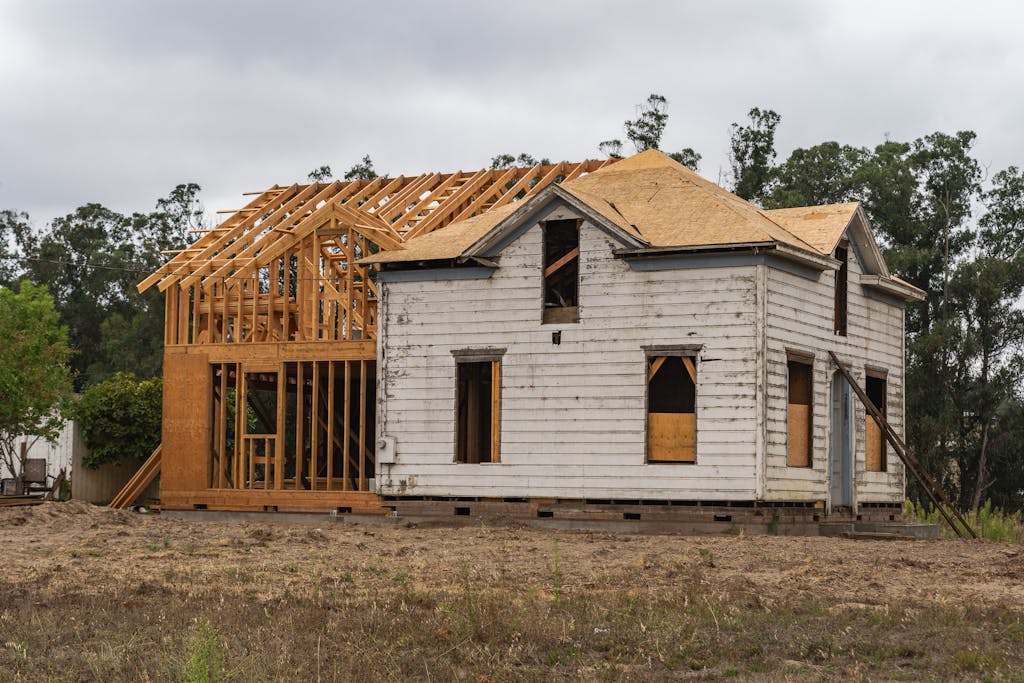
Once we can safely enter, we work our way from the bottom up and the outside in. We inspect the foundation for cracks and water damage. We check the bearing points where the beams meet the walls. We use hammers and probes to test the density of the wood framing. A probe allows us to determine the depth of the char and the quality of the remaining wood. We measure the deflection in the floors and the ceilings to see if they have moved out of level.
Stabilization is the active phase of making the home safe. This involves installing temporary supports to hold up the damaged structure. We might install screw jacks in the basement to support a weakened beam. We might build temporary wood walls to catch a sagging ceiling. We board up windows and doors not just for security, but to restore some rigidity to the wall openings. This shoring allows investigators, adjusters, and restoration crews to work inside the building without the constant fear of collapse. It is the bridge between the disaster and the reconstruction.
The structural safety of your home is not something to guess about after a fire. The damage goes deep into the bones of the house and changes the way it handles gravity and load. Wood rot, thermal shock, water weight, and truss failure are real and present dangers that require professional evaluation. Bentonville homeowners rely on Toro Construction because we bring the engineering mindset and the construction experience needed to navigate these risks. We do not just look at the surface. We analyze the system as a whole to ensure that your home is safe to enter and eventually safe to live in again. Our twenty year craftsmanship warranty reflects our commitment to rebuilding homes that are structurally sound and built to last. When the smoke clears, let the professionals handle the risk so you can focus on the recovery. Contact us today to secure your property and start the journey back to a safe and stable home.