
Bentonville homeowners are no strangers to severe weather. The Ozarks region sees everything from sudden spring thunderstorms to heavy winter ice. While a massive tree falling on a house is an obvious disaster, wind damage is often much more subtle. You might look at your roof after a storm and think everything is fine because all the shingles are still there. However, the forces exerted by high winds can compromise the integrity of your roofing system in ways that are not immediately visible from the ground. Understanding how wind interacts with your home is the first step in protecting your investment.
Wind does not just blow over your roof. It interacts with the angles and planes of your home to create complex pressures. These pressures test every nail, seal, and flashing point. A roof is designed to withstand a certain amount of wind load, but nature often exceeds these limits. When that happens, the damage can lead to slow leaks, rot, and eventual structural failure. Recognizing the mechanics of storm damage helps you understand why professional inspections are necessary even after a storm that seemed minor.
The Physics of Wind Uplift
Most people imagine wind pushing down on a roof. While positive pressure on the windward side does happen, the real danger comes from suction. This phenomenon is known as wind uplift. As wind moves over the roof, it speeds up. According to the laws of physics, faster moving air creates lower pressure. This low pressure zone above your roof acts like a giant vacuum cleaner. It tries to pull the shingles and the decking straight up off the house.

The pressure is not uniform across the entire surface. The corners and the edges of the roof experience the highest amount of uplift. The wind swirls around these areas and creates vortices that tug violently at the materials. This is why you often see damage starting at the eaves or the rake edges. Once the wind manages to lift a corner of a shingle, it gains leverage. The suction force increases and can peel back the materials with surprising ease.
This uplift force is constantly working against the fasteners and adhesives that hold your roof together. If the nails are driven too deep or if the adhesive strip has dried out, the shingles have less resistance. A strong gust can break the bond between the shingles. Once that seal is broken, the shingle will flap in the wind. This flapping action causes the material to fatigue and eventually crease or tear off completely.
Asphalt Shingle Damage
Asphalt shingles are the most common roofing material in Arkansas. They are durable, but they have specific vulnerabilities when it comes to wind. The most recognizable sign of damage is a missing shingle. This happens when the wind force exceeds the strength of the nails and the sealant. The shingle rips away and leaves the underlayment exposed. This is an immediate leak risk that requires prompt repair.
Need a roof replacement? Click here for our residential roofing service.
Creasing is a more common but less obvious form of damage. When a shingle is lifted by the wind but does not tear off, it folds back on itself. This folding creates a crease across the top of the shingle. You might see a dark line running horizontally across the tab. This crease indicates that the fiberglass mat inside the shingle has broken. The shingle might lay flat again after the storm, but its structural integrity is gone. It will eventually crack along that line and allow water to pass through.
Seal failure is another critical issue. Every shingle has a strip of adhesive tar on the back that bonds it to the shingle below. High winds can break this bond. Dust and dirt then blow in and stick to the adhesive. This prevents the shingle from resealing when the sun comes out. An unsealed shingle provides no protection against wind driven rain. It will lift up every time the wind blows, acting as a scoop for water.
The Threat of Flying Debris
Wind is rarely the only factor during a storm. It picks up loose objects and turns them into projectiles. Tree branches are the most common source of impact damage in Bentonville. A large limb falling on a roof can puncture the decking and cause a catastrophic failure. However, even small branches can cause significant harm. They can scour the protective granules off the shingles or crack the fiberglass mat upon impact.
Your neighbor’s patio furniture or a loose trash can lid can also become dangerous during a severe thunderstorm. These items hit the roof with tremendous force. The impact can dent metal vents, crack plastic skylights, and shatter slate or tile roofs. Asphalt shingles might show a bruise where the object hit. This bruise is a soft spot where the underlying mat has been crushed.
Debris damage is often localized. You might have one section of the roof that is heavily damaged while the rest remains intact. It is important to inspect the entire roof area after a storm. Small punctures can be hard to see but they allow water to seep directly into the attic insulation.
Wind Driven Rain and Water Intrusion
Rain typically falls downward. Gravity pulls it off the roof and into the gutters. However, during a storm with high winds, rain can fall sideways or even be pushed uphill. This is known as wind driven rain. It tests the waterproofing of your roof in ways that a normal rain shower does not. The wind pushes water under the edges of the shingles and up open valleys.

Your roof relies on overlaps to shed water. Shingles overlap each other to keep water moving down. When water is pushed up, it can bypass these overlaps. It can enter through the nail holes or get behind the flashing. This is why a high quality underlayment is so important. It acts as a secondary barrier when the primary layer is compromised by wind.
Vents and chimneys are common entry points for wind driven rain. If the flashing is loose or if the caulk has cracked, the wind will force water into the gaps. You might notice water stains on your ceiling after a storm even if there are no missing shingles. This is usually a sign that the wind pushed water through a vulnerability in the flashing or ventilation system.
The Role of Hail in Storm Damage
Wind and hail often go hand in hand in the Midwest. Hailstones can range in size from tiny pellets to baseballs. The damage they cause depends on their size and density. Large hail can punch holes through the shingles and the decking. Smaller hail causes granule loss. The granules on an asphalt shingle protect the asphalt from the sun. When hail knocks these granules off, the asphalt is exposed to UV rays.
UV exposure causes the asphalt to dry out and crack prematurely. This shortens the lifespan of the roof significantly. You might see large amounts of mineral granules in your gutters after a hailstorm. This is a clear indicator that the roof has taken a beating. Hail impact marks look like dark bruises on the shingle. They are soft to the touch and indicate that the shingle has been compromised.
Metal roofs are also susceptible to hail. While hail might not puncture a metal panel, it can dent it. These dents can stretch the metal and stress the fasteners. Large dents can also affect the aesthetic appeal of the roof and lower the resale value of the home. Insurance adjusters look for these specific signs of collateral damage when assessing a storm claim.
Hidden Structural Stress
The force of the wind transfers from the shingles to the roof deck and down into the framing of the house. In extreme wind events, the roof structure itself can be stressed. The uplift force can pull the sheathing nails loose from the trusses. This creates a condition where the roof deck is no longer securely attached to the frame.
Want to know what to do first after roof storm damage? Click here for more information.
You might notice that the roof line looks uneven or wavy. This could be a sign that the decking has shifted or lifted. Inside the attic, you might see cracks in the rafters or trusses. This type of structural damage is rare in typical thunderstorms but common in tornadoes or straight line wind events. It requires immediate attention from a professional contractor to ensure the safety of the home.
The stress on the fasteners can also lead to nail pops. The movement of the roof deck pushes the nails up. The nail heads push against the shingles and eventually wear through the surface. This creates a direct path for water to enter the attic. Nail pops are small and hard to see from the ground, but they are a common source of leaks after a major storm.
How Age Affects Storm Resistance
The age of your roof plays a major role in how well it withstands wind and storms. A new roof has flexible shingles and strong adhesive seals. It is designed to flex slightly with the wind and then settle back into place. As a roof ages, the materials lose their flexibility. The asphalt becomes brittle and the sealant dries out.
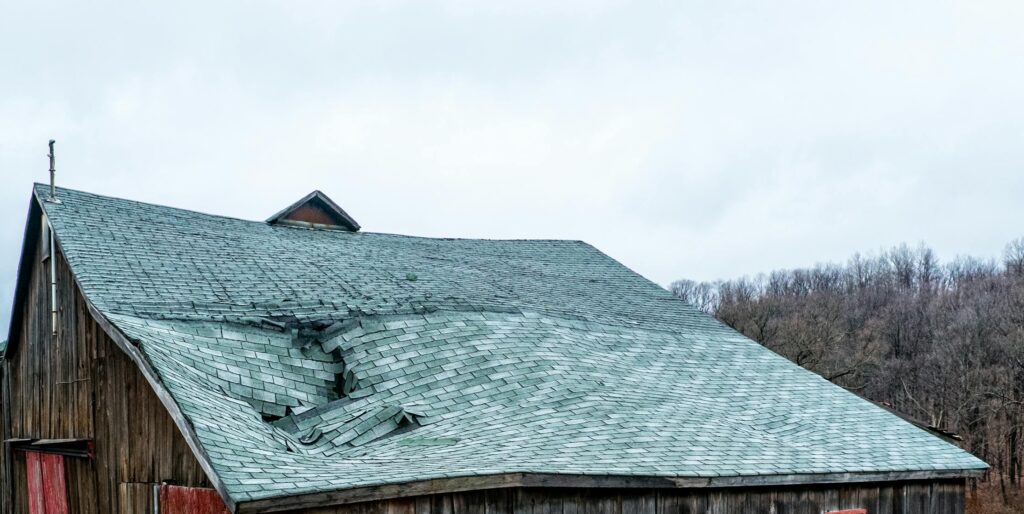
An older roof is much more likely to suffer damage during a storm. The brittle shingles will crack instead of flexing. The weak adhesive will fail and allow the shingles to lift. If your roof is nearing the twenty year mark, even a moderate storm can cause significant damage. You need to be more vigilant about inspections as your roof gets older.
Maintenance also factors into resistance. A roof that has been well maintained with properly sealed flashings and clear gutters will perform better than a neglected roof. Regular inspections allow you to catch loose shingles or failing seals before a storm hits. This proactive approach can save you from a catastrophic failure.
Why Professional Repair is Necessary
Attempting to repair storm damage yourself is risky. You might cover a hole but miss the underlying structural damage. You might use the wrong type of caulk or the wrong nails. Improper repairs can void your manufacturer warranty and lead to future leaks.
A professional roofer understands the system as a whole. We know how to weave new shingles into the existing roof to create a seamless repair. We know how to replace damaged flashing without disturbing the surrounding materials. We use high quality materials that match your existing roof as closely as possible.
Toro Construction serves Bentonville and the surrounding areas with integrity. We are a minority owned and family operated business. We have seen firsthand the power of Arkansas storms. We know how to build roofs that stand up to the wind and the rain. We stand behind our work with a twenty year craftsmanship warranty.
Wind and storms are a fact of life in Bentonville. Your roof is the shield that protects your family from these elements. While modern roofing materials are tough, they are not invincible. Wind uplift, flying debris, and hail can all compromise the integrity of your home. The damage is not always obvious to the untrained eye. Hidden seal failures and micro cracks can lead to slow leaks that rot your home from the inside out. Prompt inspection and professional repair are the keys to longevity. Toro Construction is here to help you weather the storm. We bring expertise and honesty to every project. Do not leave your home vulnerable to the next weather event. Contact us today for a comprehensive roof assessment and ensure your property remains secure.