
The roof is the most important component of your home’s exterior. It protects you from the elements such as rain, snow, and sun. It keeps your heating and cooling costs in check by insulating your living space. Most homeowners in Bentonville do not think about their roof until there is a problem. You might assume everything is fine because you do not see water dripping into your living room. However, a roof can be failing long before the first leak appears. Recognizing the subtle signs of age and damage allows you to plan for a replacement on your own terms rather than dealing with an emergency situation.
Asphalt shingles are the most common roofing material in Arkansas. They are durable and affordable but they do not last forever. The intense heat of the summer and the freezing temperatures of the winter cause them to expand and contract. This cycle eventually breaks down the structural integrity of the material. Knowing what to look for can save you thousands of dollars in water damage repairs. You do not need to be a professional roofer to spot the red flags. A simple visual inspection from the ground or a ladder is often enough to tell you that it is time to call a professional.
The Age of Your Roof
The first thing to consider is the age of your current roof. Most asphalt shingle roofs have a lifespan of twenty to twenty five years. If your roof was installed more than two decades ago it is likely nearing the end of its useful life. Even if the shingles look okay from the street the adhesive that seals them together may have dried out. This makes them susceptible to wind damage.
You can often find the age of the roof in your home inspection report if you bought the house recently. If you do not have that paperwork you can look at the permit history for your property. Building permits are public record and will tell you exactly when the roof was last replaced. Understanding the age gives you a baseline for making decisions. It rarely makes sense to spend money repairing a twenty year old roof when a replacement is inevitable.
Metal roofs typically last much longer than asphalt. A standing seam metal roof can last fifty years or more. However, the fasteners and washers on a metal roof can wear out sooner. Checking the condition of the screws and the sealant is important even on a long lasting metal system. Knowing the expected lifespan of your specific material helps you budget for the future.
Curling and Buckling Shingles
Shingles should lie flat against the roof deck. When they start to curl or buckle it is a clear sign that they are weathering. Curling can happen in two ways. Cupping occurs when the edges of the shingle turn upward. Clawing occurs when the edges stay flat and the middle starts to come up. Both types of curling indicate that the asphalt is drying out and shrinking.
Buckling is usually visible as a wave or a distortion that runs up the roof slope. This can be caused by the movement of the wood deck underneath or by the underlayment wrinkling. It can also happen if the attic is not properly ventilated. Hot air gets trapped in the attic and cooks the shingles from the bottom up. This heat causes the shingles to distort and lose their ability to shed water.
Curled and buckled shingles are brittle. They break easily when hit by hail or debris. They also catch the wind. A strong gust can rip a curled shingle right off the roof. Once the shingles start to deform they are no longer sealing the roof effectively. This allows wind driven rain to get underneath and rot the wood decking.
Excessive Granule Loss
Asphalt shingles are covered in small mineral granules. These granules serve a vital purpose. They protect the asphalt from the sun’s ultraviolet rays. They also provide the color of the roof and give it fire resistance. It is normal for a new roof to lose some excess granules in the first year. However, if you have an older roof and you start seeing a lot of granules in your gutters it is a warning sign.
Need a roof replacement? Click here for our residential roofing service.
You might notice bald spots on the shingles where the black asphalt is showing through. These spots look like dark patches on the roof. Without the granules the asphalt is exposed to direct sunlight. The UV rays bake the asphalt and cause it to crack and fail rapidly. This accelerates the aging process of the entire roof.
Check the ground around your downspouts after a heavy rain. If you see a pile of granules it means your roof is shedding its protective coating. This is often a sign that the shingles are reaching the end of their lifespan. A roof that is losing granules is a roof that is vulnerable to the elements.
Moss and Algae Growth
Moss and algae are common issues in Bentonville due to our humid climate. Algae appears as dark black streaks running down the roof. This is mostly a cosmetic issue and does not necessarily mean the roof needs to be replaced. It can often be cleaned by a professional. However, moss is a different story.
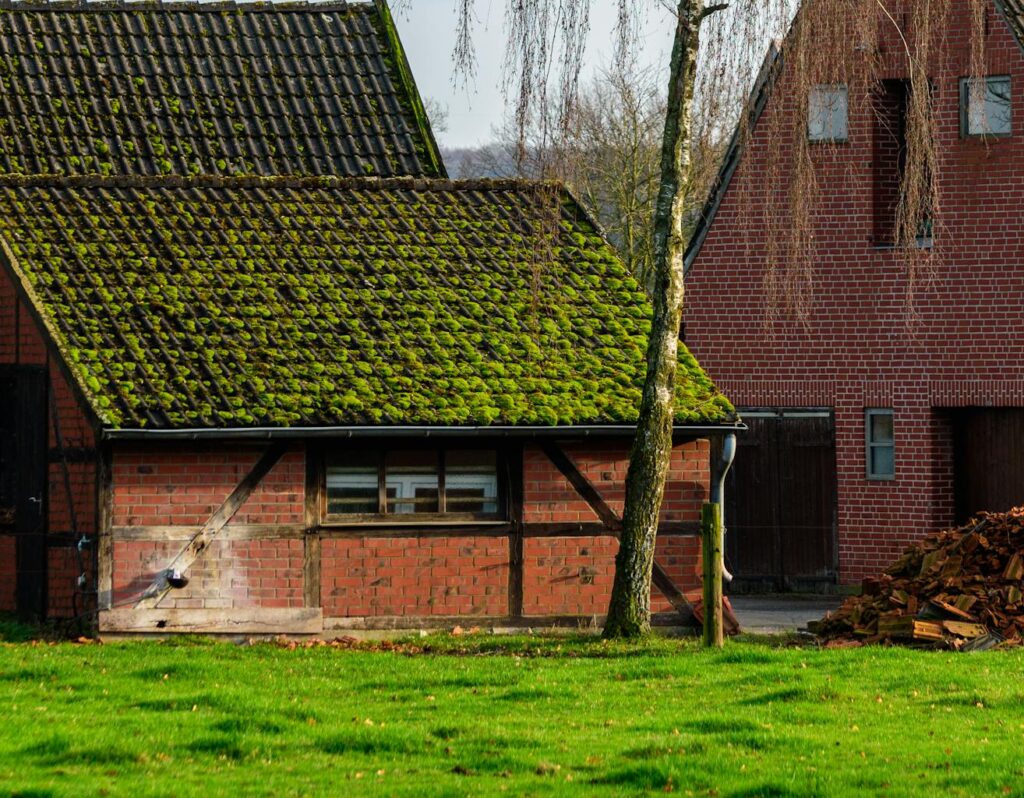
Moss grows in shady areas and holds moisture against the roof surface. It looks like thick green clumps. As the moss grows its roots work their way under the shingles. This lifts the shingles up and breaks the seal. It allows water to wick underneath and reach the wood deck. In freezing weather the wet moss freezes and expands which causes even more damage to the shingles.
You can try to brush the moss off but you risk damaging the granules. If the moss growth is extensive it may have already damaged the integrity of the roof. A roof covered in moss is often hiding rot underneath. Addressing moss early is key but severe cases often require a roof replacement to fix the underlying structure.
Seeing Sunlight in the Attic
One of the best ways to check the condition of your roof is to go into the attic on a sunny day. Turn off the lights and look up at the underside of the roof deck. You should not see any pinholes of light coming through. If you see light coming through the roof boards it means there are holes in your shingles.
Light coming in means water can get in too. You might also look for water stains on the rafters or the insulation. Wet insulation will look dark and matted. It loses its R value when it gets wet. Seeing active leaks or light in the attic is a sign that the roof system has failed.
Check the area around the chimney and the vent pipes. These are common leak points. If you see water trails running down the wood it means the flashing has failed. While a single leak can sometimes be repaired, multiple points of light indicate that the roof is porous and needs to be replaced.
Sagging Roof Deck
A roof line should be straight and strong. If you look at your roof from the street and see a saddle or a dip in the middle it is a serious structural issue. Sagging is often caused by long term water intrusion that has rotted the decking or the trusses. The wood becomes soft and can no longer support the weight of the roofing materials.
Want to know how to compare roofing estimates? Click here for more information.
This is a safety hazard. A sagging roof is at risk of collapse especially under the weight of snow or ice. You need to act immediately if you see this sign. It is not just a roofing problem; it is a framing problem. Replacing the shingles alone will not fix the issue. You will need to replace the damaged wood to restore the structural integrity of the home.
Sagging can also be caused by improper installation or inadequate bracing in the attic. A professional inspection can determine the cause of the sag. Regardless of the cause, a sagging roof almost always requires a full tear off and replacement to correct the problem safely.
Flashing Deterioration
Flashing is the metal material used to seal the joints and valleys of your roof. It is installed around the chimney, vents, and skylights. Over time the flashing can rust or break loose. The sealant used to hold it in place can dry out and crack.

Check the condition of the flashing around your chimney. If the metal is rusted or if there are gaps between the metal and the brick it is a potential leak point. Older homes often have tar or roof cement around the flashing. This material breaks down over time and needs to be maintained.
Failed flashing allows water to run down the walls and into the structure. This often causes rot that is hidden behind the siding or the drywall. Replacing the flashing usually requires removing the surrounding shingles. If the flashing is failing in multiple areas it is often more cost effective to replace the entire roof and install a modern flashing system.
Interior Water Damage
Sometimes the first sign of a roof problem is inside the house. You might notice a brown stain on the ceiling or paint bubbling on the walls. This indicates that water has made its way through the roof, the attic, and the insulation to reach the drywall.
These stains often appear after a heavy rain but they can also be caused by ice dams in the winter. Do not ignore these signs. Painting over a water stain does not fix the leak. The water is still damaging the structure above the ceiling.
Mold growth on the ceiling or in the corners of the room is another sign of hidden moisture. If you smell a musty odor in a certain room it could be coming from a roof leak. Investigating the source of the moisture is critical. Interior damage is a clear signal that the roof is no longer doing its job.
Knowing when to replace your roof is a key part of responsible homeownership. Waiting until water is pouring into your bedroom is a recipe for disaster. By paying attention to the signs like curling shingles, granule loss, and sagging decking you can make an informed decision. Replacing your roof protects your investment and ensures the safety of your family. Toro Construction brings over twenty years of experience to the Bentonville community. We are a minority owned and family operated business that values integrity. We offer a twenty year craftsmanship warranty because we believe in doing the job right. Do not ignore the warning signs. Contact us today for a comprehensive inspection and let us help you secure your home for the future.